
GCSE Biology (AQA)
331 videos | 14 hours
Please subscribe to watch this video.
This, and all other videos, are included in our premium subscriptions.
Premium accounts get access to all videos.
Enable autoplay to keep watching
Your browser is blocking videos from playing automatically. To turn it back on:
Safari (Mac): Click the Safari menu item in the top bar, then Settings → Websites → Auto-Play, then set Auto-Play to Allow All Auto-Play for the current website.
Safari (iPhone/iPad): open the Settings app, then Apps → Safari → Auto-Play, and select Allow All Auto-Play.
Adaptation to Dim Light
- The iris contains muscles that control the size of the pupil.
- The pupil is a black hole that allows light into the eyeball.
- Pupil size changes through muscle contraction and relaxation.
- The size of the pupil determines the amount of light let in.
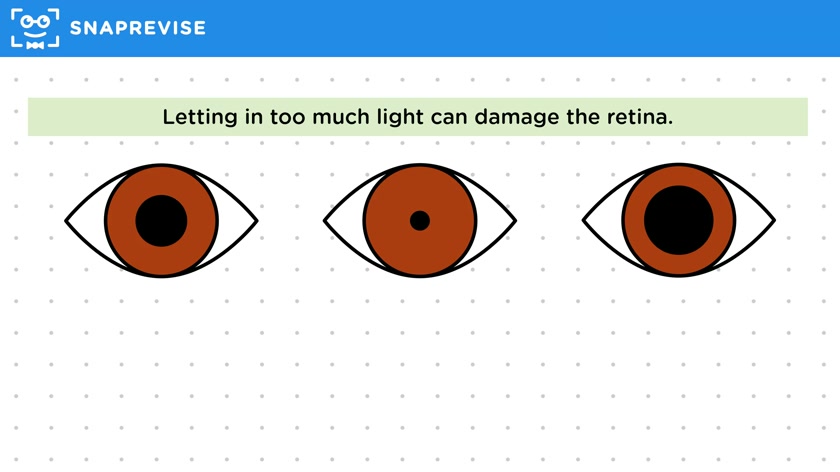
- Large pupils let in more light, but too much light can damage the retina.
- The retina contains light receptors and is located at the back of the eye.
- Pupil size adjusts to different light levels: smaller in bright light and larger in low light.
- The adjustment of pupil size is a reflex and cannot be controlled voluntarily.
- The iris reflex can be tested by covering one eye, which causes both pupils to dilate in response to perceived darkness.
- This reflex test can help identify issues with the nervous system.
- Medical professionals use light exposure to test pupil response during examinations.
Please subscribe to access these revision notes.
This, and all other video notes, are included in our premium subscriptions.
Premium accounts get access to all videos and revision notes.
162
questions for Homeostasis and response
51
questions for The human nervous system