
GCSE Biology (AQA)
331 videos | 14 hours
Please subscribe to watch this video.
This, and all other videos, are included in our premium subscriptions.
Premium accounts get access to all videos.
Enable autoplay to keep watching
Your browser is blocking videos from playing automatically. To turn it back on:
Safari (Mac): Click the Safari menu item in the top bar, then Settings → Websites → Auto-Play, then set Auto-Play to Allow All Auto-Play for the current website.
Safari (iPhone/iPad): open the Settings app, then Apps → Safari → Auto-Play, and select Allow All Auto-Play.
Aseptic Techniques
- Aseptic techniques are used to prevent contamination in pure cultures of microorganisms.
- Microorganisms include small organisms like bacteria, and a pure culture contains only one type of microorganism.
- Contaminated cultures, where multiple microorganisms grow, can confuse experiments.
- Pure cultures are essential for accurately testing the effects of disinfectants and antibiotics.
- To prepare an uncontaminated culture, Petri dishes and culture media must be sterilized, often using an autoclave which heats and pressurizes equipment to kill bacteria.
- Inoculating loops used to transfer microorganisms must be sterilized by passing through a flame to kill bacteria before use.
- When opening vials containing bacteria samples, lids should be slightly removed to prevent air contaminants.
- The inoculating loop is cooled after flaming before dipping into the sample to avoid killing the bacteria in the sample.
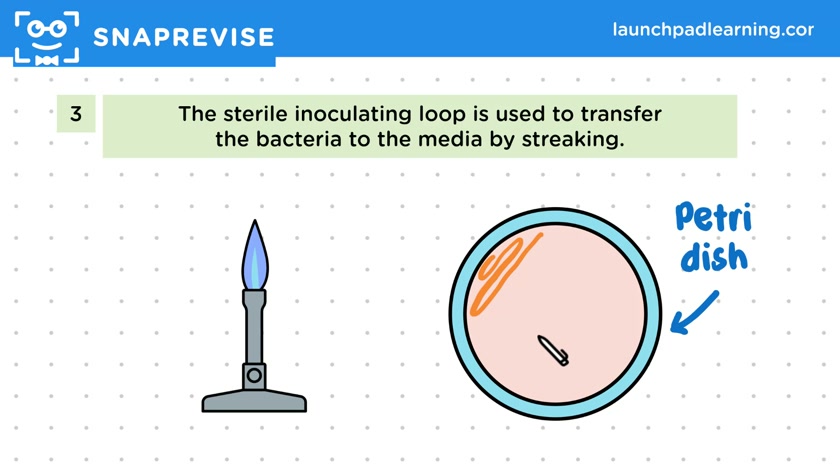
- Bacteria are transferred to growth media, like agar in a Petri dish, using a sterile inoculating loop to streak the bacteria.
- The inoculating loop is flamed between streaks to prevent cross-contamination and to dilute the bacteria concentration across the Petri dish.
- After streaking, the Petri dish is sealed with adhesive tape in specific spots to prevent opening and contamination but allowing air for bacterial growth.
- Petri dishes should be labeled with the culture type and stored upside down to prevent contamination from condensation.
- Cultures are typically incubated at 25 degrees Celsius in school labs to reduce the risk of growing harmful microbes, while hospital labs may use higher temperatures for rapid pathogen identification.
- After incubation, bacterial colonies will appear, showing growth patterns based on the streaking method, allowing observation of isolated colonies.
Please subscribe to access these revision notes.
This, and all other video notes, are included in our premium subscriptions.
Premium accounts get access to all videos and revision notes.
145
questions for Cell biology
27
questions for Cell structure