
GCSE Biology (AQA)
331 videos | 14 hours
Please subscribe to watch this video.
This, and all other videos, are included in our premium subscriptions.
Premium accounts get access to all videos.
Enable autoplay to keep watching
Your browser is blocking videos from playing automatically. To turn it back on:
Safari (Mac): Click the Safari menu item in the top bar, then Settings → Websites → Auto-Play, then set Auto-Play to Allow All Auto-Play for the current website.
Safari (iPhone/iPad): open the Settings app, then Apps → Safari → Auto-Play, and select Allow All Auto-Play.
Barrier Plant Defences
- Plants resist infection from pathogens through physical barriers.
- Three examples of plant barriers to infection are:
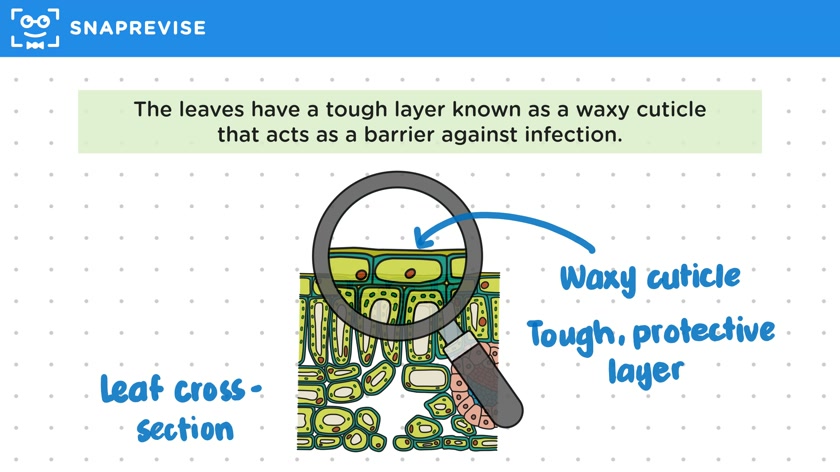
- 1. A tough waxy cuticle on leaves.
- 2. Dead cells around the stem or bark.
- 3. Cellulose cell walls.
- The waxy cuticle on leaves acts as a barrier against infection by forming a tough protective outer layer that prevents pathogens from entering the plant.
- Layers of dead cells around the stems, such as bark, act as a physical barrier that can shed and carry pathogens away.
- Plant cells have cellulose cell walls that also serve as a physical barrier against pathogens, preventing them from infecting the cells.
Please subscribe to access these revision notes.
This, and all other video notes, are included in our premium subscriptions.
Premium accounts get access to all videos and revision notes.
3
questions for Infection and response
2
questions for Plant disease (biology only)