
GCSE Biology (AQA)
331 videos | 14 hours
Please subscribe to watch this video.
This, and all other videos, are included in our premium subscriptions.
Premium accounts get access to all videos.
Enable autoplay to keep watching
Your browser is blocking videos from playing automatically. To turn it back on:
Safari (Mac): Click the Safari menu item in the top bar, then Settings → Websites → Auto-Play, then set Auto-Play to Allow All Auto-Play for the current website.
Safari (iPhone/iPad): open the Settings app, then Apps → Safari → Auto-Play, and select Allow All Auto-Play.
Carbohydrates & Carbohydrases
- Carbohydrates are large molecules composed of simple sugars.
- Simple sugars are carbohydrates with one or two sugar molecules.
- Foods high in carbohydrates include bread, pasta, and starchy vegetables like potatoes.
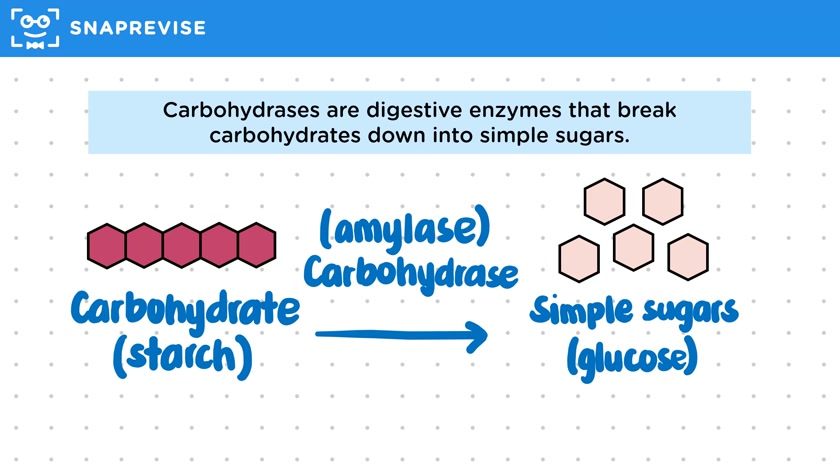
- Carbohydrates in foods are broken down into simple sugars by digestive enzymes.
- The process involves using a carbohydrate enzyme, such as amylase, to break down starch into glucose.
- Amylase is a key digestive enzyme, important to highlight for exams.
- Simple word equations are sufficient for exams, without needing chemical symbol equations.
- Amylase is produced in the saliva glands and pancreas.
- The saliva glands are located towards the back of the mouth and underneath the tongue.
- The pancreas produces digestive enzymes that are released into the small intestine.
- It's important to know the sites of production and action of amylase.
- Once amylase breaks down starch into glucose, the glucose is used in cellular respiration.
- Respiration is crucial for producing molecules necessary for an organism's survival.
- Simple sugars can be reassembled into new carbohydrates by synthesis enzymes in the body.
- The use of simple sugars for respiration and synthesis is linked to metabolism.
Please subscribe to access these revision notes.
This, and all other video notes, are included in our premium subscriptions.
Premium accounts get access to all videos and revision notes.
55
questions for Organisation
47
questions for Animal tissues, organs and organ systems