
GCSE Biology (AQA)
331 videos | 14 hours
Please subscribe to watch this video.
This, and all other videos, are included in our premium subscriptions.
Premium accounts get access to all videos.
Enable autoplay to keep watching
Your browser is blocking videos from playing automatically. To turn it back on:
Safari (Mac): Click the Safari menu item in the top bar, then Settings → Websites → Auto-Play, then set Auto-Play to Allow All Auto-Play for the current website.
Safari (iPhone/iPad): open the Settings app, then Apps → Safari → Auto-Play, and select Allow All Auto-Play.
Chromosomes
- The nucleus of a eukaryotic cell contains chromosomes.
- A diagram shows a eukaryotic cell with a nucleus depicted as a big blue blob.
- Chromosomes within the nucleus are made of a single molecule of DNA.
- Chromosomes are composed of coiled DNA strands.
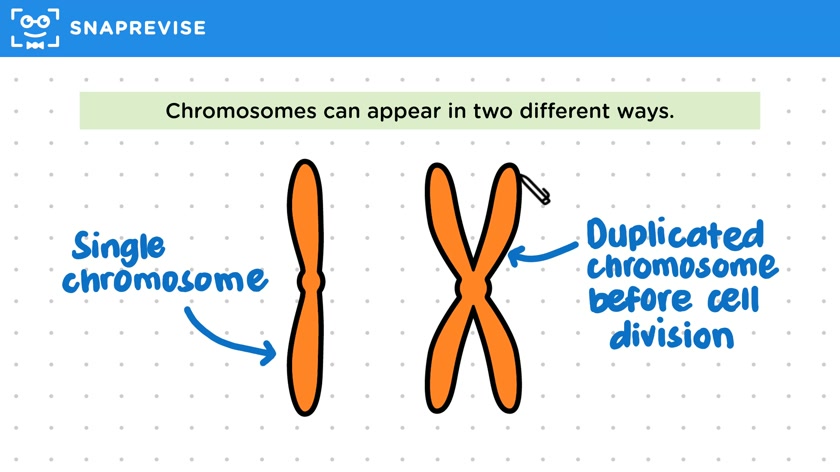
- Chromosomes can appear as X-shaped during cell division.
- Before cell division, chromosomes duplicate and are visible as X-shaped structures.
- Duplicated chromosomes are joined at the centromere.
- The term "centromere" is not required for the exam.
- Human body cells typically have 23 pairs of chromosomes, totaling 46.
- Some individuals may have extra or missing chromosomes.
- Chromosomes in body cells are normally found in pairs.
- One chromosome of each pair is inherited from the biological mother (egg cell) and the other from the biological father (sperm cell).
- Different eukaryotic animals and plants have varying numbers of chromosomes.
Please subscribe to access these revision notes.
This, and all other video notes, are included in our premium subscriptions.
Premium accounts get access to all videos and revision notes.
145
questions for Cell biology
54
questions for Cell division