
GCSE Biology (AQA)
331 videos | 14 hours
Please subscribe to watch this video.
This, and all other videos, are included in our premium subscriptions.
Premium accounts get access to all videos.
Enable autoplay to keep watching
Your browser is blocking videos from playing automatically. To turn it back on:
Safari (Mac): Click the Safari menu item in the top bar, then Settings → Websites → Auto-Play, then set Auto-Play to Allow All Auto-Play for the current website.
Safari (iPhone/iPad): open the Settings app, then Apps → Safari → Auto-Play, and select Allow All Auto-Play.
Controlling Body Temperature
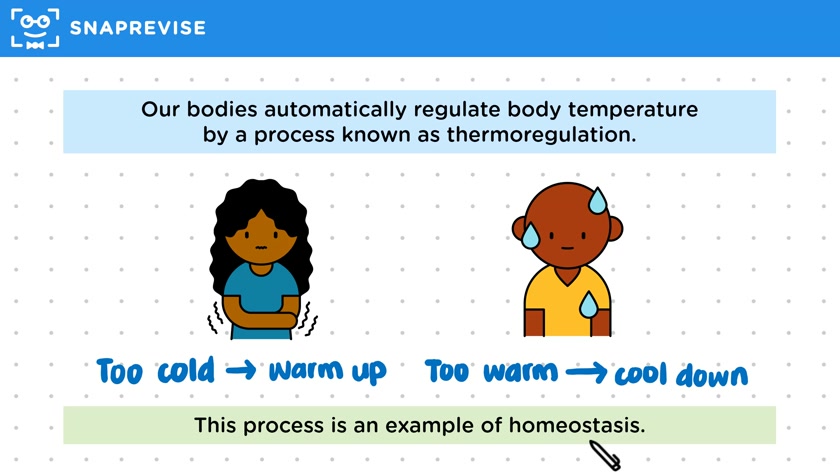
- Our bodies automatically regulate body temperature through a process known as thermoregulation.
- "Thermo" means heat, indicating that thermoregulation is the regulation of body heat.
- Thermoregulation involves maintaining body temperature at an optimal level.
- It helps warm up the body when too cold and cool down when too warm.
- Thermoregulation is an example of homeostasis, which maintains stable internal conditions.
- Homeostasis comes from the Greek "homeo" (the same) and "stasis" (steady).
- Other examples of homeostasis include maintaining water levels and blood glucose.
- Deviations from the average human body temperature of 37 degrees Celsius can negatively affect various bodily functions.
- Changes in body temperature can impact organ functions, cell functions, and enzyme activity.
- Most enzymes have an optimum temperature of 37 degrees Celsius, where they function best and have the highest activity.
- Even small changes in temperature can significantly affect enzyme activity.
Please subscribe to access these revision notes.
This, and all other video notes, are included in our premium subscriptions.
Premium accounts get access to all videos and revision notes.
162
questions for Homeostasis and response
51
questions for The human nervous system