
GCSE Biology (AQA)
331 videos | 14 hours
Please subscribe to watch this video.
This, and all other videos, are included in our premium subscriptions.
Premium accounts get access to all videos.
Enable autoplay to keep watching
Your browser is blocking videos from playing automatically. To turn it back on:
Safari (Mac): Click the Safari menu item in the top bar, then Settings → Websites → Auto-Play, then set Auto-Play to Allow All Auto-Play for the current website.
Safari (iPhone/iPad): open the Settings app, then Apps → Safari → Auto-Play, and select Allow All Auto-Play.
Correlation & Causation
- Correlation and causation are different concepts in data analysis.
- Correlation indicates an association between two variables, but does not imply one causes the other.
- Example given: correlation between sunburn cases and ice cream sales, which is due to sunny weather rather than ice cream causing sunburn.
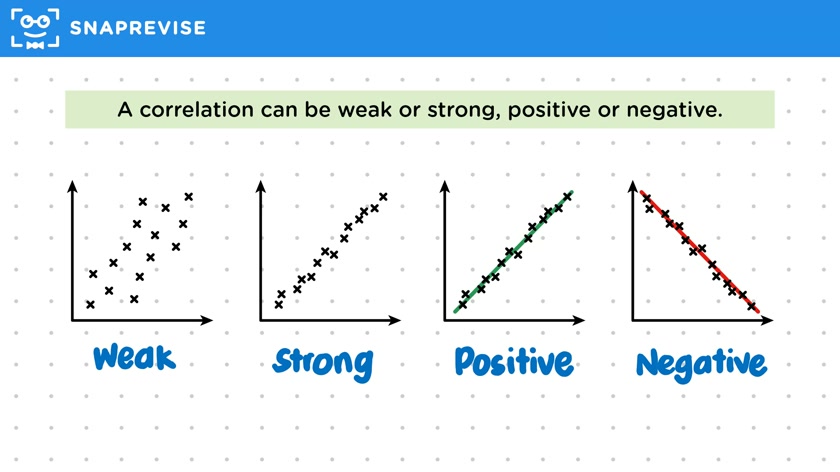
- Correlations can be described as weak or strong, and positive or negative.
- Weak correlation example: scattered data with a slight upward trend.
- Strong correlation example: data closely aligned, forming a clear upward trend.
- Negative correlation example: as one variable increases, the other decreases, e.g., eating more food reduces hunger.
- Causation implies that one variable directly affects another, demonstrated through mechanisms or proven effects.
- Example of causation: watering a plant leads to its growth.
- Smoking and lung cancer correlation shown with data from 1950 to 2000, indicating a causal link as chemicals in cigarettes cause cancer in lab animals.
- Importance of distinguishing between correlation and causation in interpreting data related to risk factors and diseases.
Please subscribe to access these revision notes.
This, and all other video notes, are included in our premium subscriptions.
Premium accounts get access to all videos and revision notes.
55
questions for Organisation
47
questions for Animal tissues, organs and organ systems