
GCSE Biology (AQA)
331 videos | 14 hours
Please subscribe to watch this video.
This, and all other videos, are included in our premium subscriptions.
Premium accounts get access to all videos.
Enable autoplay to keep watching
Your browser is blocking videos from playing automatically. To turn it back on:
Safari (Mac): Click the Safari menu item in the top bar, then Settings → Websites → Auto-Play, then set Auto-Play to Allow All Auto-Play for the current website.
Safari (iPhone/iPad): open the Settings app, then Apps → Safari → Auto-Play, and select Allow All Auto-Play.
Culturing Microorganisms
- Bacteria multiply through a process called binary fission.
- Binary fission allows bacterial colonies to grow by dividing into two.
- Unlike eukaryotic cell division, prokaryotes like bacteria lack membrane-enclosed organelles such as the nucleus.
- Bacterial reproduction aims to increase population size.
- Essential nutrients for bacterial reproduction include water, sugars, and salts.
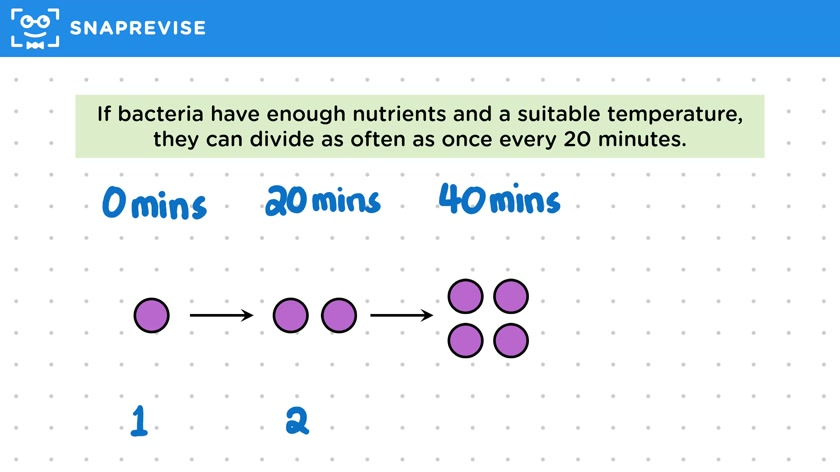
- With sufficient nutrients and suitable temperature, bacteria can divide approximately every 20 minutes.
- Example of bacterial growth: one bacterium can become eight in just 60 minutes.
- Bacterial population growth may slow or stop if nutrients are depleted.
- Bacteria can be cultured in labs using nutrient broth solutions or on agar gel plates.
- Nutrient broth is a liquid containing essential nutrients, while agar plates provide a solid growth medium.
- It is crucial to prevent contamination of bacterial cultures by other bacteria.
- Bacterial growth is indicated by cloudiness in nutrient broth and colony formation on agar plates.
Please subscribe to access these revision notes.
This, and all other video notes, are included in our premium subscriptions.
Premium accounts get access to all videos and revision notes.
145
questions for Cell biology
27
questions for Cell structure