
GCSE Biology (AQA)
331 videos | 14 hours
Please subscribe to watch this video.
This, and all other videos, are included in our premium subscriptions.
Premium accounts get access to all videos.
Enable autoplay to keep watching
Your browser is blocking videos from playing automatically. To turn it back on:
Safari (Mac): Click the Safari menu item in the top bar, then Settings → Websites → Auto-Play, then set Auto-Play to Allow All Auto-Play for the current website.
Safari (iPhone/iPad): open the Settings app, then Apps → Safari → Auto-Play, and select Allow All Auto-Play.
Effects of Smoking
- Cigarette smoke contains thousands of harmful chemicals.
- Smoking damages the lungs and airways.
- Secondhand smoke poses health risks to non-smokers.
- Smoking is a major risk factor for lung diseases like asthma, COPD, and lung infections.
- Lung cancer, caused by uncontrolled cell growth, can occur in one or both lungs.
- Symptoms of lung diseases include coughing, shortness of breath, and heavy mucus.
- Diseased lungs have reduced alveoli surface area, leading to decreased oxygen absorption.
- Long-term smokers often develop emphysema, characterized by reduced lung surface area and difficulty in exercising.
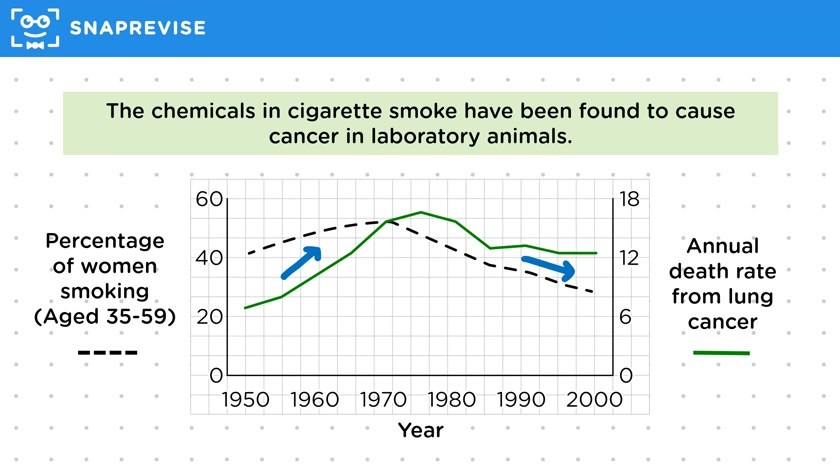
- Laboratory studies show that chemicals in cigarette smoke cause cancer in animals.
- Historical data shows a correlation between women smoking and lung cancer rates.
- Smoking is also linked to cardiovascular diseases by damaging artery linings and promoting fatty buildups.
- Carbon monoxide in smoke reduces oxygen transport in the blood, affecting overall oxygen availability.
- Nicotine increases heart rate, putting additional strain on the heart.
- Smoking during pregnancy can harm the unborn baby, leading to low birth weight, premature birth, and increased miscarriage risk.
- Graphs and studies show a direct correlation between smoking in pregnant women and reduced birth mass in babies.
Please subscribe to access these revision notes.
This, and all other video notes, are included in our premium subscriptions.
Premium accounts get access to all videos and revision notes.
55
questions for Organisation
47
questions for Animal tissues, organs and organ systems