
GCSE Biology (AQA)
331 videos | 14 hours
Please subscribe to watch this video.
This, and all other videos, are included in our premium subscriptions.
Premium accounts get access to all videos.
Enable autoplay to keep watching
Your browser is blocking videos from playing automatically. To turn it back on:
Safari (Mac): Click the Safari menu item in the top bar, then Settings → Websites → Auto-Play, then set Auto-Play to Allow All Auto-Play for the current website.
Safari (iPhone/iPad): open the Settings app, then Apps → Safari → Auto-Play, and select Allow All Auto-Play.
Efficiency of Food Production
- Biomass loss in food production can be minimized by reducing the number of stages in a food chain.
- At each stage of a food chain where food is consumed, biomass is transferred and lost.
- Direct consumption of plants is more efficient as only about 10% of biomass is transferred to the next trophic level.
- Fewer stages in a food chain result in less biomass loss.
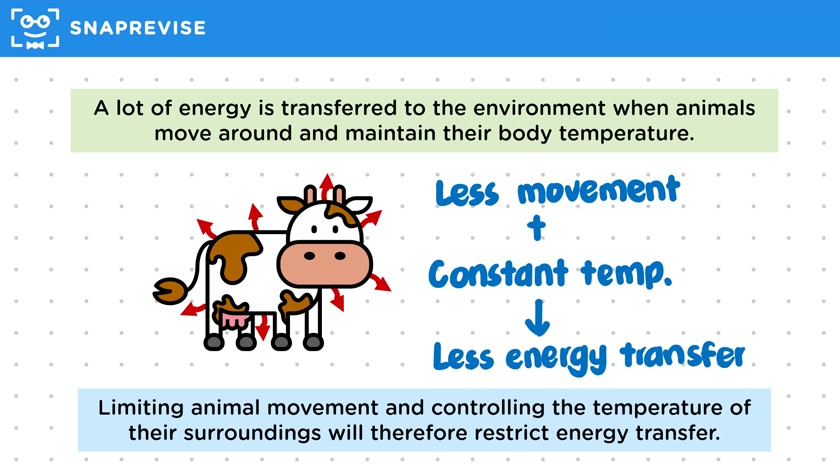
- Energy is also lost when animals move and maintain their body temperature, which can be minimized by limiting animal movement and controlling environmental temperatures.
- Restricting animal movement reduces the need for biomass to be used in muscle respiration.
- Controlling ambient temperature decreases the biomass used for maintaining body temperature.
- Feeding animals high-protein diets, such as in beef cattle, enhances growth and muscle development, making food production more efficient.
Please subscribe to access these revision notes.
This, and all other video notes, are included in our premium subscriptions.
Premium accounts get access to all videos and revision notes.
61
questions for Ecology
18
questions for Food production (biology only)