
GCSE Biology (AQA)
331 videos | 14 hours
Please subscribe to watch this video.
This, and all other videos, are included in our premium subscriptions.
Premium accounts get access to all videos.
Enable autoplay to keep watching
Your browser is blocking videos from playing automatically. To turn it back on:
Safari (Mac): Click the Safari menu item in the top bar, then Settings → Websites → Auto-Play, then set Auto-Play to Allow All Auto-Play for the current website.
Safari (iPhone/iPad): open the Settings app, then Apps → Safari → Auto-Play, and select Allow All Auto-Play.
Evaluating Heart Disease Treatments
- There are various treatments for heart disease, each with its own risks and benefits.
- It's crucial to understand and evaluate the methods of treatment for exams.
- Evaluation involves weighing the advantages and disadvantages of each treatment option.
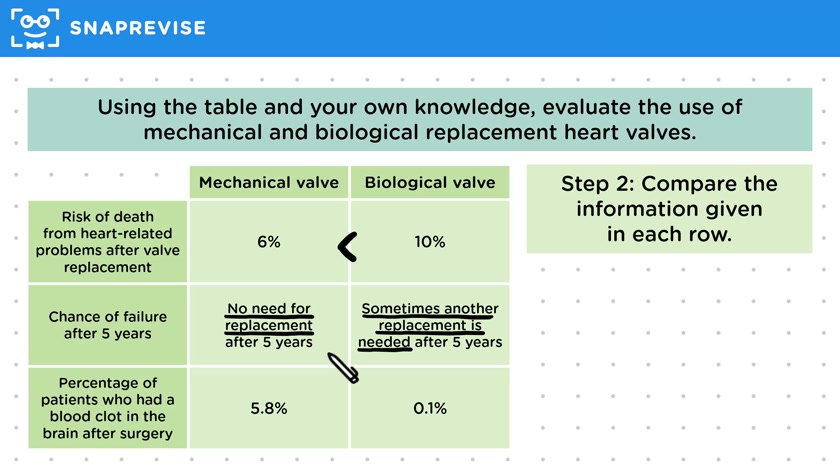
- Example given: evaluating mechanical and biological replacement heart valves.
- Mechanical valves have a lower risk of death from heart-related problems and do not usually require replacement within five years.
- Biological valves, however, may need replacement after five years and have a lower risk of causing blood clots in the brain post-surgery.
- The table used in the example compares mechanical and biological valves on factors like risk of death, chance of failure, and incidence of blood clots.
- Additional knowledge about mechanical valves includes the lifelong need for anti-clotting medication, which can lead to excessive bleeding, but they are readily available.
- Additional knowledge about biological valves includes potential rejection by the body, the need for immunosuppressant drugs, and ethical issues if animal tissue is used.
- Combining table data with personal knowledge can enhance exam answers and improve marks.
Please subscribe to access these revision notes.
This, and all other video notes, are included in our premium subscriptions.
Premium accounts get access to all videos and revision notes.
55
questions for Organisation
47
questions for Animal tissues, organs and organ systems