
GCSE Biology (AQA)
331 videos | 14 hours
Please subscribe to watch this video.
This, and all other videos, are included in our premium subscriptions.
Premium accounts get access to all videos.
Enable autoplay to keep watching
Your browser is blocking videos from playing automatically. To turn it back on:
Safari (Mac): Click the Safari menu item in the top bar, then Settings → Websites → Auto-Play, then set Auto-Play to Allow All Auto-Play for the current website.
Safari (iPhone/iPad): open the Settings app, then Apps → Safari → Auto-Play, and select Allow All Auto-Play.
Exchange in Fish
- Fish absorb dissolved oxygen from water through diffusion across their gills into the blood.
- Gills are located under a bony flap and function similarly to human lungs.
- Water containing dissolved oxygen enters through the fish's mouth and exits through the gills.
- Fish opening and closing their mouths is part of the breathing process.
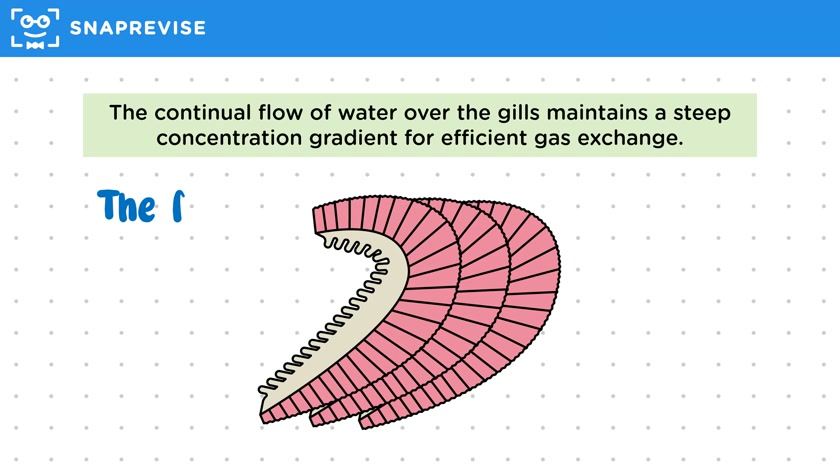
- Gills are adapted for gas exchange by having thin layers of tissue and a large surface area.
- Gills are divided into many sections and layers, increasing the surface area for diffusion.
- Continuous water flow over the gills maintains a steep concentration gradient, essential for efficient gas exchange.
- Gills are well ventilated, ensuring a constant flow of water.
- Water flows across the gills, where oxygen is absorbed and carbon dioxide is expelled.
- Gills contain rich capillary networks that facilitate efficient blood supply and gas circulation.
- Blood flows around the gills, turning from deoxygenated (blue) to oxygenated (red) as gases are exchanged.
- Oxygen diffuses from high concentrations in the water to lower concentrations in the blood, while carbon dioxide diffuses from higher concentrations in the blood to lower concentrations in the water.
- Key features increasing gill effectiveness include a large surface area, thin membrane, efficient blood supply, and good ventilation.
Please subscribe to access these revision notes.
This, and all other video notes, are included in our premium subscriptions.
Premium accounts get access to all videos and revision notes.
145
questions for Cell biology
64
questions for Transport in cells