
GCSE Biology (AQA)
331 videos | 14 hours
Please subscribe to watch this video.
This, and all other videos, are included in our premium subscriptions.
Premium accounts get access to all videos.
Enable autoplay to keep watching
Your browser is blocking videos from playing automatically. To turn it back on:
Safari (Mac): Click the Safari menu item in the top bar, then Settings → Websites → Auto-Play, then set Auto-Play to Allow All Auto-Play for the current website.
Safari (iPhone/iPad): open the Settings app, then Apps → Safari → Auto-Play, and select Allow All Auto-Play.
Extremophiles
- Organisms that live in extreme environments are called extremophiles.
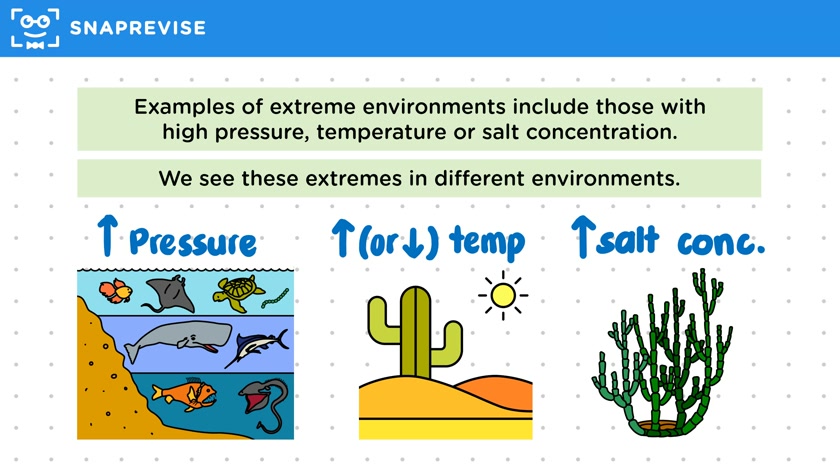
- Extremophiles thrive in environments considered extreme due to challenges like high pressure, temperature, or salt concentration.
- Examples of extreme environments include deep sea levels with high pressure and lack of sunlight, deserts with extreme temperature variations, and coastal salt marshes with high salt concentrations.
- Extremophiles include bacteria that have adapted to live in deep sea vents, which are hot, high-pressure areas of underwater volcanic activity releasing toxic hydrogen compounds.
- Some extremophile bacteria can survive temperatures over 100 degrees Celsius and utilize toxic substances like hydrogen sulfide, which smells like rotten eggs.
- For exam purposes, it's important to know that extremophile bacteria can adapt to and survive in the extreme conditions of deep sea vents, but detailed descriptions of these environments are not required.
Please subscribe to access these revision notes.
This, and all other video notes, are included in our premium subscriptions.
Premium accounts get access to all videos and revision notes.
61
questions for Ecology
3
questions for Adaptations, interdependence and competition