
GCSE Biology (AQA)
331 videos | 14 hours
Please subscribe to watch this video.
This, and all other videos, are included in our premium subscriptions.
Premium accounts get access to all videos.
Enable autoplay to keep watching
Your browser is blocking videos from playing automatically. To turn it back on:
Safari (Mac): Click the Safari menu item in the top bar, then Settings → Websites → Auto-Play, then set Auto-Play to Allow All Auto-Play for the current website.
Safari (iPhone/iPad): open the Settings app, then Apps → Safari → Auto-Play, and select Allow All Auto-Play.
Food Chains
- Food chains illustrate feeding relationships within a community.
- They show the flow of food and energy between organisms.
- Food chains provide an overview of how communities are organized.
- Food chains begin with photosynthetic organisms (producers) that convert energy into glucose and biomass.
- Producers include plants and algae, which photosynthesize and convert the sun's energy into biomass.
- Energy cannot be created or destroyed, a key concept for understanding food chains.
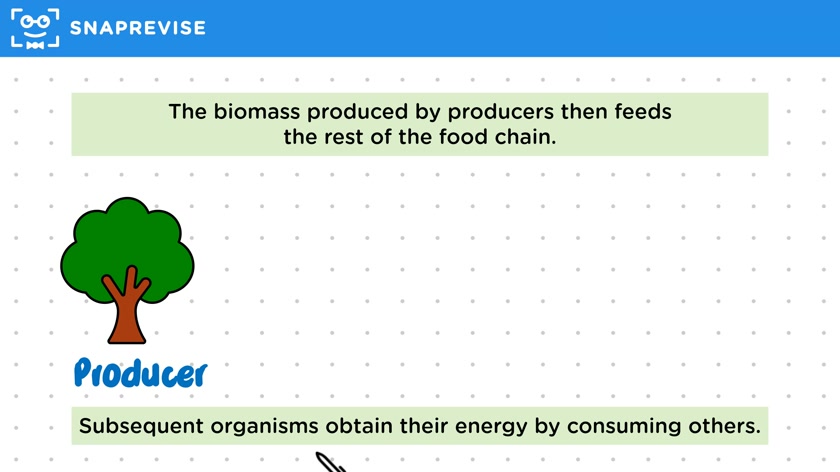
- The biomass produced by producers feeds the rest of the food chain.
- Organisms in the food chain obtain energy by consuming other organisms.
- Producers are eaten by primary consumers, which may be eaten by secondary consumers, followed by tertiary consumers.
- Primary consumers are the first level of consumers after producers, secondary are the second, and tertiary are the third.
- Consumers that kill and eat other animals are called predators, and the animals they eat are called prey.
- The final predator in a food chain is referred to as the top predator or apex predator.
Please subscribe to access these revision notes.
This, and all other video notes, are included in our premium subscriptions.
Premium accounts get access to all videos and revision notes.
61
questions for Ecology
16
questions for Organisation of an ecosystem