
GCSE Biology (AQA)
331 videos | 14 hours
Please subscribe to watch this video.
This, and all other videos, are included in our premium subscriptions.
Premium accounts get access to all videos.
Enable autoplay to keep watching
Your browser is blocking videos from playing automatically. To turn it back on:
Safari (Mac): Click the Safari menu item in the top bar, then Settings → Websites → Auto-Play, then set Auto-Play to Allow All Auto-Play for the current website.
Safari (iPhone/iPad): open the Settings app, then Apps → Safari → Auto-Play, and select Allow All Auto-Play.
Hormones & Glands
- Hormones are chemical messengers that travel through the blood.
- They control various processes in the body including growth, sleep, and heart rate.
- Hormones are not limited to reproductive functions but include many other types.
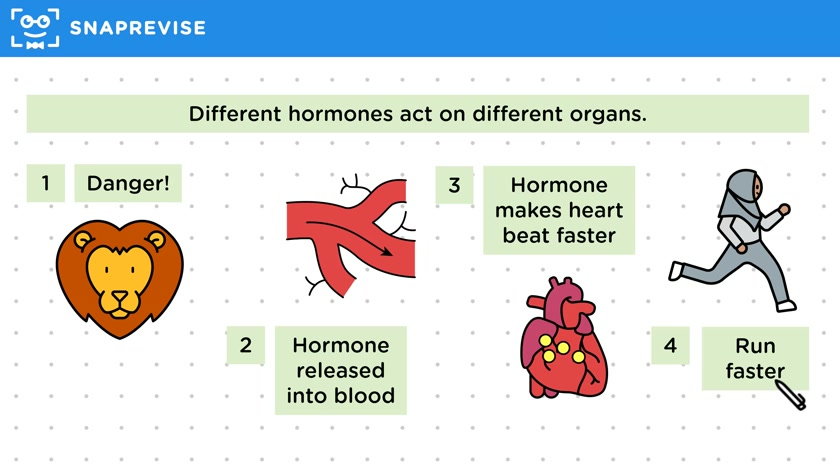
- Hormones act on specific organs; for example, adrenaline affects the heart.
- In a dangerous situation, such as encountering a lion, hormones like adrenaline are released.
- Adrenaline increases heart rate, which helps supply more oxygen and glucose to muscles, aiding in faster movement.
- Hormones are produced by glands, specifically endocrine glands.
- The adrenal glands, located on top of the kidneys, produce adrenaline.
- The organ on which a hormone acts is called the target organ; for adrenaline, it is the heart.
Please subscribe to access these revision notes.
This, and all other video notes, are included in our premium subscriptions.
Premium accounts get access to all videos and revision notes.
162
questions for Homeostasis and response
99
questions for Hormonal coordination in humans