
GCSE Biology (AQA)
331 videos | 14 hours
Please subscribe to watch this video.
This, and all other videos, are included in our premium subscriptions.
Premium accounts get access to all videos.
Enable autoplay to keep watching
Your browser is blocking videos from playing automatically. To turn it back on:
Safari (Mac): Click the Safari menu item in the top bar, then Settings → Websites → Auto-Play, then set Auto-Play to Allow All Auto-Play for the current website.
Safari (iPhone/iPad): open the Settings app, then Apps → Safari → Auto-Play, and select Allow All Auto-Play.
Hormones of the Menstrual Cycle
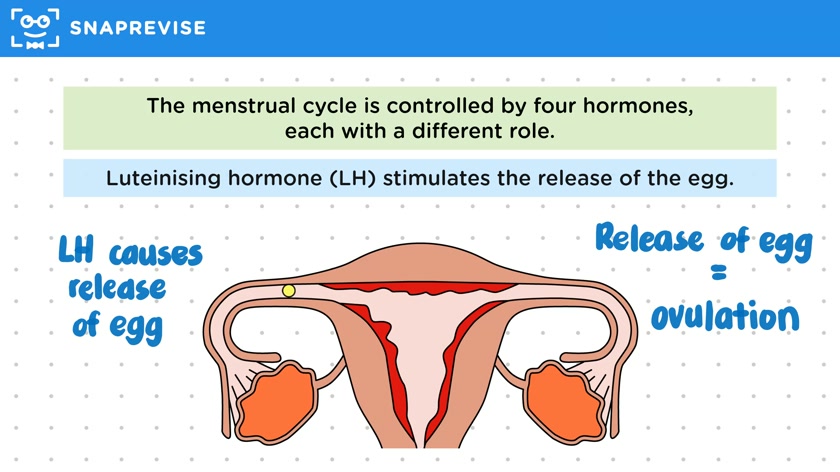
- The menstrual cycle is regulated by four key hormones: Follicle Stimulating Hormone (FSH), Luteinizing Hormone (LH), estrogen, and progesterone.
- FSH is responsible for the maturation of an egg within the ovary.
- LH triggers the release of the egg from the ovary, a process known as ovulation.
- Estrogen and progesterone help maintain and control the thickness of the uterine lining throughout the menstrual cycle.
- For exams, it's important to know the full names and roles of these hormones.
- FSH and LH are produced by the pituitary gland, while estrogen and progesterone are produced in the ovaries.
- Understanding the function of a follicle, which is a cluster of cells containing an egg, can aid in remembering the roles of these hormones.
- The video includes a table summarizing the necessary information about each hormone for exam preparation.
Please subscribe to access these revision notes.
This, and all other video notes, are included in our premium subscriptions.
Premium accounts get access to all videos and revision notes.
162
questions for Homeostasis and response
99
questions for Hormonal coordination in humans