
GCSE Biology (AQA)
331 videos | 14 hours
Please subscribe to watch this video.
This, and all other videos, are included in our premium subscriptions.
Premium accounts get access to all videos.
Enable autoplay to keep watching
Your browser is blocking videos from playing automatically. To turn it back on:
Safari (Mac): Click the Safari menu item in the top bar, then Settings → Websites → Auto-Play, then set Auto-Play to Allow All Auto-Play for the current website.
Safari (iPhone/iPad): open the Settings app, then Apps → Safari → Auto-Play, and select Allow All Auto-Play.
Immune System
- The immune system consists of white blood cells in the blood that destroy pathogens.
- Phagocytes, a type of white blood cell, are non-specific and defend against all pathogens.
- Phagocytosis involves phagocytes engulfing, digesting, and destroying pathogens.
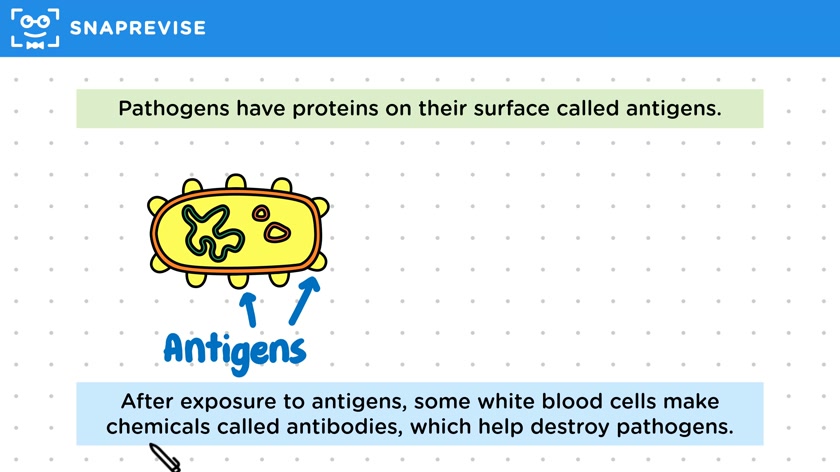
- Pathogens have antigens on their surface which are targeted by antibodies produced by some white blood cells.
- Antibodies are specific to particular pathogens and help clump them together for easier destruction by phagocytes.
- Re-exposure to the same pathogen results in a quicker immune response, reducing the likelihood of illness.
- Vaccines work on this principle and are part of the immune system study for exams.
- Other white blood cells produce antitoxins that neutralize toxins released by pathogens.
- For exams, it's important to understand the roles of white blood cells in defending against pathogens through phagocytosis and antitoxin production.
Please subscribe to access these revision notes.
This, and all other video notes, are included in our premium subscriptions.
Premium accounts get access to all videos and revision notes.
81
questions for Infection and response
50
questions for Communicable diseases