
GCSE Biology (AQA)
331 videos | 14 hours
Please subscribe to watch this video.
This, and all other videos, are included in our premium subscriptions.
Premium accounts get access to all videos.
Enable autoplay to keep watching
Your browser is blocking videos from playing automatically. To turn it back on:
Safari (Mac): Click the Safari menu item in the top bar, then Settings → Websites → Auto-Play, then set Auto-Play to Allow All Auto-Play for the current website.
Safari (iPhone/iPad): open the Settings app, then Apps → Safari → Auto-Play, and select Allow All Auto-Play.
Interactions of Menstrual Hormones
- Hormones in the menstrual cycle interact in various ways.
- The menstrual cycle begins with menstruation (period).
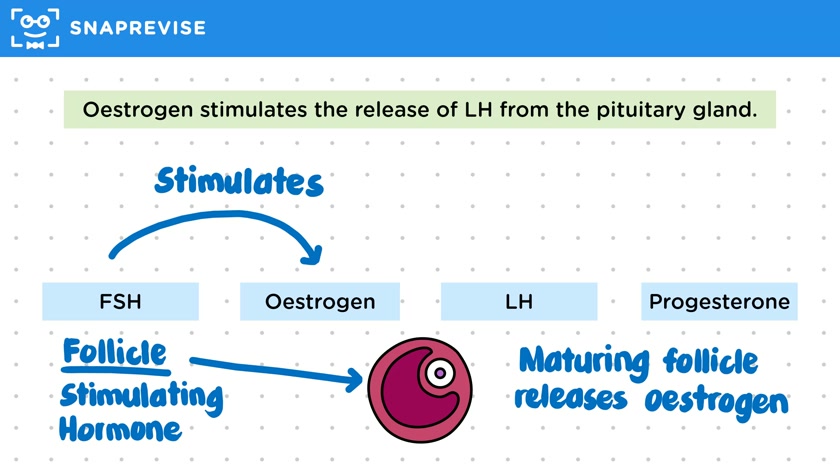
- Hormone levels increase in the following order: Follicle Stimulating Hormone (FSH), Estrogen, Luteinizing Hormone (LH), and Progesterone.
- Mnemonic for hormone order: F-O-L-M-P or phrase "fabulous owls love parties."
- FSH stimulates the maturation of eggs and follicles in the ovaries.
- As follicles mature, they release Estrogen.
- Estrogen, when high enough, stimulates the release of LH from the pituitary gland.
- LH triggers ovulation, releasing the egg into the fallopian tube.
- Ovulation stimulates the production of Progesterone.
- Progesterone inhibits the production of both LH and FSH to prevent multiple eggs from maturing and being released in one cycle.
- Estrogen inhibits the production of FSH to prevent its levels from getting too high, demonstrating negative feedback.
- Understanding these interactions and feedback mechanisms is crucial for exams but specific examples of negative feedback are not required for recall.
Please subscribe to access these revision notes.
This, and all other video notes, are included in our premium subscriptions.
Premium accounts get access to all videos and revision notes.
162
questions for Homeostasis and response
99
questions for Hormonal coordination in humans