
GCSE Biology (AQA)
331 videos | 14 hours
Please subscribe to watch this video.
This, and all other videos, are included in our premium subscriptions.
Premium accounts get access to all videos.
Enable autoplay to keep watching
Your browser is blocking videos from playing automatically. To turn it back on:
Safari (Mac): Click the Safari menu item in the top bar, then Settings → Websites → Auto-Play, then set Auto-Play to Allow All Auto-Play for the current website.
Safari (iPhone/iPad): open the Settings app, then Apps → Safari → Auto-Play, and select Allow All Auto-Play.
Interdependence
- All organisms have basic needs for survival: air, water, food, and shelter.
- Organisms often depend on other organisms within their community for these needs.
- Plants may rely on other organisms for processes like pollination or seed dispersal.
- Interdependence refers to how organisms rely on each other for survival and reproduction.
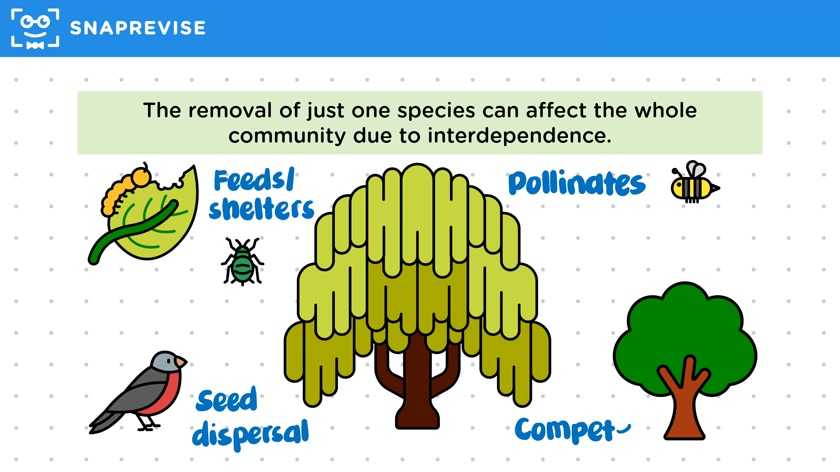
- The removal of one species can impact the entire community due to interdependence.
- Large organisms, such as trees, provide food and shelter to many other organisms like caterpillars, aphids, and birds.
- Some animals, like birds and bees, support trees by dispersing seeds and pollinating them.
- Organisms compete for resources in their environment.
- Food webs illustrate the interdependence of organisms on each other for food.
- Changes in the population of one species in a food web can affect other species; for example, a decrease in grain can lead to reduced populations of mice and grasshoppers, which in turn affects owl populations.
- The direction of the food chain is crucial; a decrease in grain leads to a decrease in owls, not the other way around.
Please subscribe to access these revision notes.
This, and all other video notes, are included in our premium subscriptions.
Premium accounts get access to all videos and revision notes.
61
questions for Ecology
3
questions for Adaptations, interdependence and competition