
GCSE Biology (AQA)
331 videos | 14 hours
Please subscribe to watch this video.
This, and all other videos, are included in our premium subscriptions.
Premium accounts get access to all videos.
Enable autoplay to keep watching
Your browser is blocking videos from playing automatically. To turn it back on:
Safari (Mac): Click the Safari menu item in the top bar, then Settings → Websites → Auto-Play, then set Auto-Play to Allow All Auto-Play for the current website.
Safari (iPhone/iPad): open the Settings app, then Apps → Safari → Auto-Play, and select Allow All Auto-Play.
Measuring Zones of Inhibition
- The zone of inhibition is a clear area around an antibacterial substance where bacteria cannot grow.
- This zone can be used to test and compare different antibiotics or antiseptics, or different concentrations of the same substance, to determine the most effective concentration for inhibiting bacterial growth.
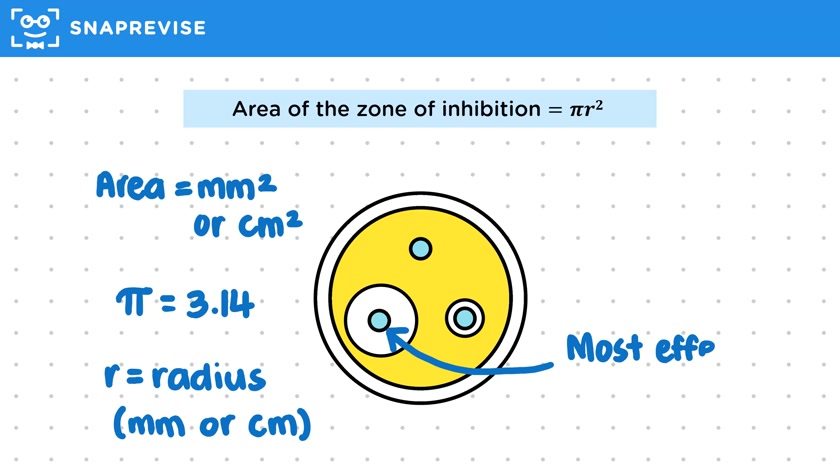
- In a petri dish, filter paper discs soaked in an antibiotic are placed on an agar plate spread with bacteria to observe the zone of inhibition.
- The clear space around the disc indicates the zone of inhibition, while the yellow color shows bacterial growth.
- The efficacy of an antibiotic is measured by the area of the zone of inhibition, calculated using the formula for the area of a circle (��r��).
- The radius (r) of the zone of inhibition is measured in millimeters or centimeters, and the area can be calculated in square millimeters or square centimeters.
- A larger zone of inhibition indicates a more effective antimicrobial agent.
- To measure the zone of inhibition, first measure the diameter of the clear space, then calculate the radius by dividing the diameter by two, and finally use the radius in the formula ��r�� to find the area.
- This method is a required practical for GCSE biology and understanding it is crucial for exams.
Please subscribe to access these revision notes.
This, and all other video notes, are included in our premium subscriptions.
Premium accounts get access to all videos and revision notes.
145
questions for Cell biology
27
questions for Cell structure