
GCSE Biology (AQA)
331 videos | 14 hours
Please subscribe to watch this video.
This, and all other videos, are included in our premium subscriptions.
Premium accounts get access to all videos.
Enable autoplay to keep watching
Your browser is blocking videos from playing automatically. To turn it back on:
Safari (Mac): Click the Safari menu item in the top bar, then Settings → Websites → Auto-Play, then set Auto-Play to Allow All Auto-Play for the current website.
Safari (iPhone/iPad): open the Settings app, then Apps → Safari → Auto-Play, and select Allow All Auto-Play.
Meiosis
- ES (gametes) are formed by a type of cell division called meiosis.
- Mitosis produces two genetically identical cells, each with 23 pairs of chromosomes.
- Meiosis occurs in reproductive organs (testes and ovaries), producing four unique gametes.
- Gametes have half the chromosome number to enable recombination and form a unique new organism.
- Meiosis involves DNA duplication and an increase in subcellular structures like mitochondria and ribosomes.
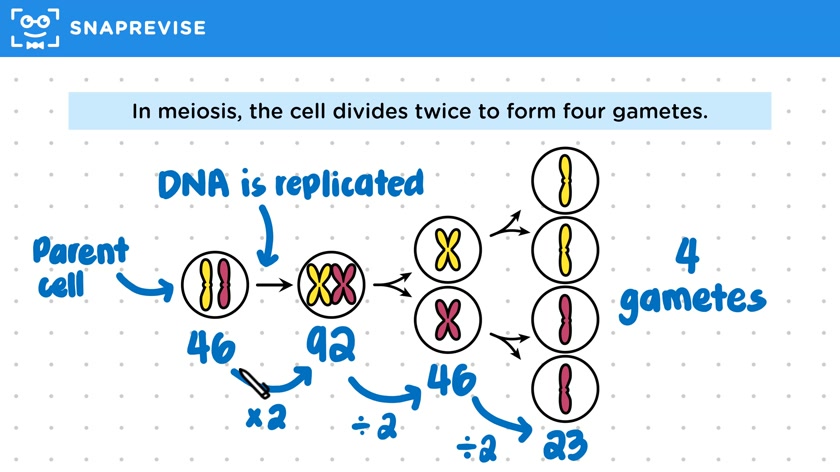
- In meiosis, a cell divides twice, resulting in four gametes each with 23 single chromosomes.
- Gametes (sperm and egg in mammals, pollen and egg in plants) are genetically different from each other.
- Meiosis creates genetic variation, important for producing genetically unique individuals.
- Mitosis involves one cell division producing two daughter cells, while meiosis involves two divisions producing four daughter cells.
- Daughter cells from mitosis are diploid (46 chromosomes), whereas those from meiosis are haploid (23 chromosomes).
- Mitosis results in genetically identical cells; meiosis results in genetically diverse cells.
- Understanding the differences between mitosis and meiosis is crucial, though detailed stages of meiosis are not required for exams.
Please subscribe to access these revision notes.
This, and all other video notes, are included in our premium subscriptions.
Premium accounts get access to all videos and revision notes.
114
questions for Inheritance, variation and evolution
19
questions for Reproduction