
GCSE Biology (AQA)
331 videos | 14 hours
Please subscribe to watch this video.
This, and all other videos, are included in our premium subscriptions.
Premium accounts get access to all videos.
Enable autoplay to keep watching
Your browser is blocking videos from playing automatically. To turn it back on:
Safari (Mac): Click the Safari menu item in the top bar, then Settings → Websites → Auto-Play, then set Auto-Play to Allow All Auto-Play for the current website.
Safari (iPhone/iPad): open the Settings app, then Apps → Safari → Auto-Play, and select Allow All Auto-Play.
Mitosis
- After interphase, cells divide into two through mitosis and cytokinesis.
- Mitosis results in two genetically identical diploid daughter cells from one diploid parent cell.
- The DNA is duplicated during interphase before mitosis begins.
- During mitosis, the nucleus breaks down after chromosomes have duplicated.
- Chromosomes line up in the middle of the cell, at the cell equator, which is an imaginary line.
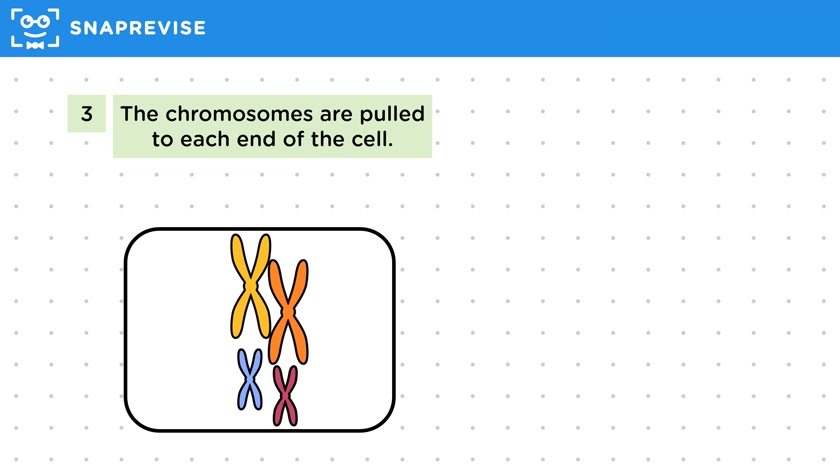
- Chromosomes are then pulled to each end of the cell, becoming chromatids once separated from the centromere.
- The cell membrane and cytoplasm divide, enlarging the cell as it prepares to split.
- Cytokinesis, the physical process of cell division, involves the division of the cytoplasm.
- New nuclei form around the chromatids in each of the two new cells, completing the formation of two distinct diploid cells.
- Understanding the general mechanism of mitosis involves describing how one parent cell divides into two daughter cells, without necessarily knowing the names of all mitotic phases.
Please subscribe to access these revision notes.
This, and all other video notes, are included in our premium subscriptions.
Premium accounts get access to all videos and revision notes.
145
questions for Cell biology
54
questions for Cell division