
GCSE Biology (AQA)
331 videos | 14 hours
Please subscribe to watch this video.
This, and all other videos, are included in our premium subscriptions.
Premium accounts get access to all videos.
Enable autoplay to keep watching
Your browser is blocking videos from playing automatically. To turn it back on:
Safari (Mac): Click the Safari menu item in the top bar, then Settings → Websites → Auto-Play, then set Auto-Play to Allow All Auto-Play for the current website.
Safari (iPhone/iPad): open the Settings app, then Apps → Safari → Auto-Play, and select Allow All Auto-Play.
Infection and response
Monoclonal antibodies (biology only) (HT only)
Monoclonal Antibodies
1:21
Producing monoclonal antibodies
Spec
4.3.2.1
- Monoclonal antibodies are laboratory-produced antibodies that are identical to each other.
- The term "monoclonal" combines "mono" (meaning single) and "clonal" (meaning identical).
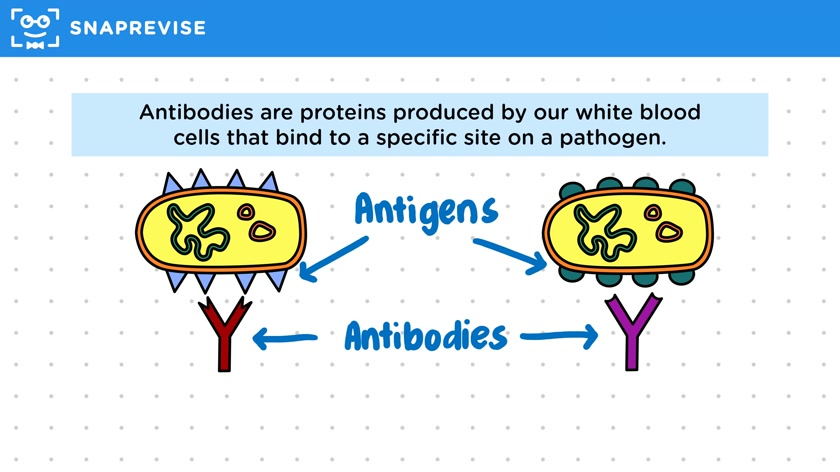
- Antibodies are proteins produced by white blood cells that bind to specific sites on pathogens.
- Antigens are proteins on cell surfaces that serve as identifying markers for antibodies.
- Antibodies attach to antigens and are part of the immune response by white blood cells.
- Antibodies can be engineered to bind to specific chemicals or cells that have antigens.
- Scientists have discovered that antibodies are specific to one binding site on one protein antigen.
- Monoclonal antibodies are used in various medical tests and treatments due to their specificity.
Please subscribe to access these revision notes.
This, and all other video notes, are included in our premium subscriptions.
Premium accounts get access to all videos and revision notes.
Report an Issue
Spotted something wrong? Let us know and we'll take a look.