
GCSE Biology (AQA)
331 videos | 14 hours
Please subscribe to watch this video.
This, and all other videos, are included in our premium subscriptions.
Premium accounts get access to all videos.
Enable autoplay to keep watching
Your browser is blocking videos from playing automatically. To turn it back on:
Safari (Mac): Click the Safari menu item in the top bar, then Settings → Websites → Auto-Play, then set Auto-Play to Allow All Auto-Play for the current website.
Safari (iPhone/iPad): open the Settings app, then Apps → Safari → Auto-Play, and select Allow All Auto-Play.
Infection and response
Monoclonal antibodies (biology only) (HT only)
Monoclonal Antibody Evaluation
3:11
Producing monoclonal antibodies
Spec
4.3.2.1
- Evaluate advantages and disadvantages of monoclonal antibodies.
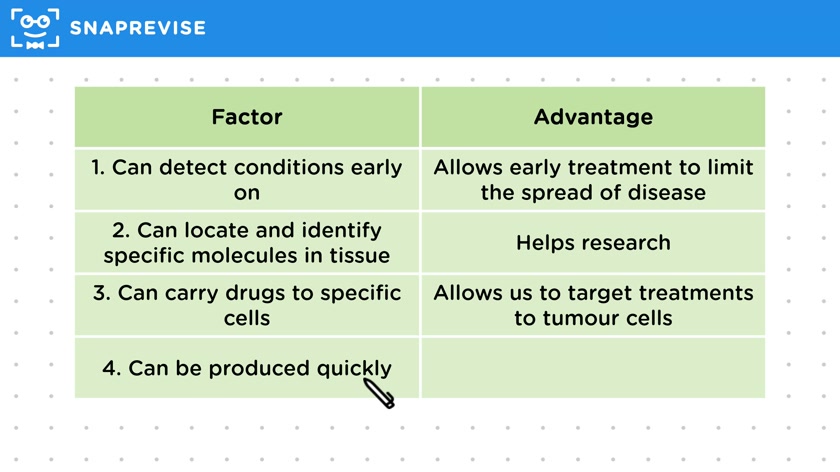
- Advantages include early detection of conditions, allowing early treatment to limit disease spread.
- Monoclonal antibodies can locate and identify specific molecules in tissues, aiding research and understanding of tissue functions.
- They can deliver drugs directly to specific cells, such as tumor cells, enhancing targeted treatment.
- Monoclonal antibodies can be produced quickly once a hybridoma is cloned, facilitating the development of new treatments.
- Disadvantages include unexpected side effects, limiting their widespread use.
- Production of monoclonal antibodies is expensive due to specialized knowledge and equipment required, impacting their affordability and accessibility.
- High costs and market considerations affect drug companies' decisions to invest in monoclonal antibody production.
Please subscribe to access these revision notes.
This, and all other video notes, are included in our premium subscriptions.
Premium accounts get access to all videos and revision notes.
Report an Issue
Spotted something wrong? Let us know and we'll take a look.