
GCSE Biology (AQA)
331 videos | 14 hours
Please subscribe to watch this video.
This, and all other videos, are included in our premium subscriptions.
Premium accounts get access to all videos.
Enable autoplay to keep watching
Your browser is blocking videos from playing automatically. To turn it back on:
Safari (Mac): Click the Safari menu item in the top bar, then Settings → Websites → Auto-Play, then set Auto-Play to Allow All Auto-Play for the current website.
Safari (iPhone/iPad): open the Settings app, then Apps → Safari → Auto-Play, and select Allow All Auto-Play.
Nervous & Hormonal Responses
- Both the nervous and endocrine systems enable body parts to communicate.
- The nervous system uses electrical impulses; the endocrine system uses chemical messages like hormones.
- The nervous system also utilizes chemicals to transmit information across synapses.
- The primary function of both systems is to transmit information.
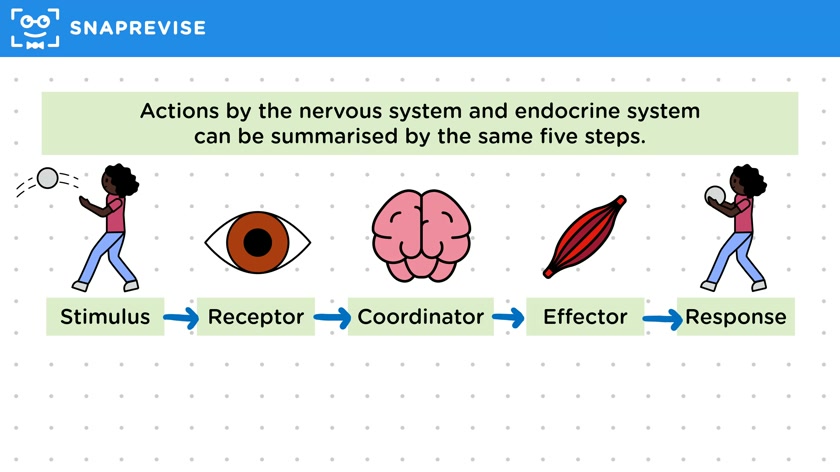
- Both systems follow a similar process involving a stimulus, receptor, coordinator, effector, and response.
- Example of nervous system response: Light receptors in the eye detect a moving ball, the brain coordinates, muscles contract to catch the ball.
- Example of endocrine system response: Light receptors detect a lion (danger), the brain coordinates, adrenal gland releases adrenaline, heart beats faster, providing energy to run.
- The coordination center can vary; it could be the brain, pituitary gland, spinal cord, or pancreas.
- Nervous responses are fast and brief, while hormonal responses are slow and long-lasting.
- Nervous responses allow for quick reactions to danger, whereas the endocrine system coordinates prolonged processes like growth.
Please subscribe to access these revision notes.
This, and all other video notes, are included in our premium subscriptions.
Premium accounts get access to all videos and revision notes.
162
questions for Homeostasis and response
99
questions for Hormonal coordination in humans