
GCSE Biology (AQA)
331 videos | 14 hours
Please subscribe to watch this video.
This, and all other videos, are included in our premium subscriptions.
Premium accounts get access to all videos.
Enable autoplay to keep watching
Your browser is blocking videos from playing automatically. To turn it back on:
Safari (Mac): Click the Safari menu item in the top bar, then Settings → Websites → Auto-Play, then set Auto-Play to Allow All Auto-Play for the current website.
Safari (iPhone/iPad): open the Settings app, then Apps → Safari → Auto-Play, and select Allow All Auto-Play.
Nitrogen Balance
- Protein excretion helps the body maintain nitrogen balance.
- Nitrogen balance is the comparison of nitrogen intake through diet versus nitrogen excretion.
- Consuming protein increases nitrogen levels as proteins are rich in nitrogen.
- Excess protein is broken down into urea, which is excreted in urine, reducing nitrogen levels.
- Proteins are broken down into amino acids, which are the building blocks of proteins and have various functions in the body.
- Unused amino acids cannot be stored and must be removed from the blood and excreted.
- Kidneys remove amino acids from the blood.
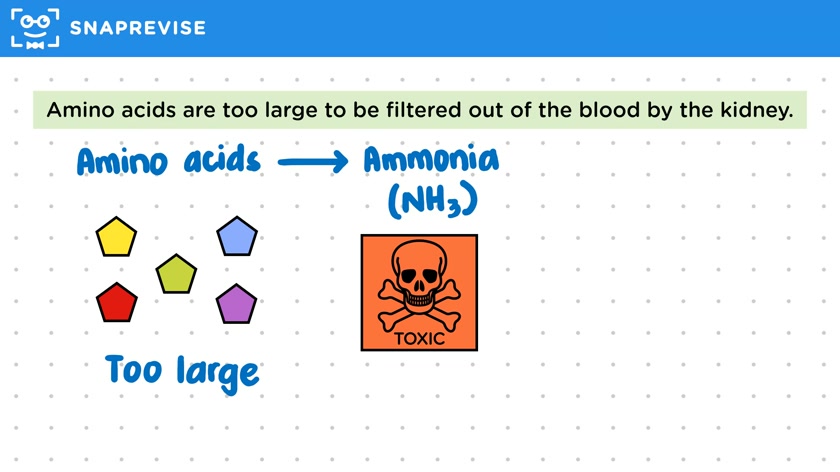
- Amino acids are too large to be filtered directly by the kidneys.
- Amino acids are broken down into ammonia (toxic) and then converted into urea (non-toxic).
- Urea, dissolved in water, can be safely stored in the body as urine or excreted through sweat.
- Urea is small enough to be filtered from the blood into urine.
- Not all animals produce urea; for example, birds convert ammonia into uric acid to avoid carrying excess water.
- Amino acids are primarily broken down in the liver, which is located next to the stomach on the right side of the abdomen.
- The process of breaking down amino acids into ammonia and then urea in the liver is known as deamination.
Please subscribe to access these revision notes.
This, and all other video notes, are included in our premium subscriptions.
Premium accounts get access to all videos and revision notes.
162
questions for Homeostasis and response
99
questions for Hormonal coordination in humans