
GCSE Biology (AQA)
331 videos | 14 hours
Please subscribe to watch this video.
This, and all other videos, are included in our premium subscriptions.
Premium accounts get access to all videos.
Enable autoplay to keep watching
Your browser is blocking videos from playing automatically. To turn it back on:
Safari (Mac): Click the Safari menu item in the top bar, then Settings → Websites → Auto-Play, then set Auto-Play to Allow All Auto-Play for the current website.
Safari (iPhone/iPad): open the Settings app, then Apps → Safari → Auto-Play, and select Allow All Auto-Play.
Order of Magnitude
- Differences in size are often described as differences in the order of magnitude.
- This concept allows for comparison between very large and very small numbers.
- Example given: comparing the diameter of the Earth to that of a marble.
- Earth's diameter: 12,742 kilometers; Marble's diameter: approximately 0.000013 kilometers.
- By dividing the Earth's diameter by the marble's diameter, it is found that the Earth is about 980 million times larger than a marble.
- Simplifying the comparison, the Earth's diameter is rounded to 13,000 kilometers, resulting in an approximate factor of 1 billion times larger than a marble.
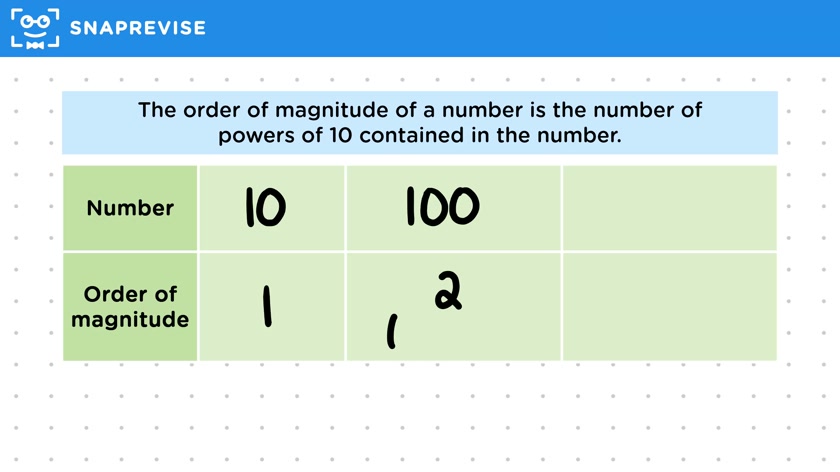
- Order of magnitude defined: the number of powers of 10 contained in a number.
- Differences in order of magnitude are calculated in factors of 10 (e.g., 10 times bigger, 100 times smaller).
- Example of order of magnitude: 10 has one order (10^1), 100 has two orders (10^2), and 1000 has three orders (10^3).
- Increasing or decreasing a number by one order of magnitude involves multiplying or dividing the number by 10.
- Order of magnitude calculations can be made using standard form to compare sizes more easily.
- Example comparing the width of a human hair (100 micrometers) to the width of HIV (100 nanometers).
- Conversion to standard form: 100 micrometers is 10^-4 meters, and 100 nanometers is 10^-7 meters.
- Calculating the difference in order of magnitude involves dividing the powers of 10, resulting in a difference of three orders of magnitude.
- This indicates that a human hair is 1000 times bigger than an HIV particle, as 10 to the power of three equals 1000.
Please subscribe to access these revision notes.
This, and all other video notes, are included in our premium subscriptions.
Premium accounts get access to all videos and revision notes.
145
questions for Cell biology
27
questions for Cell structure