
GCSE Biology (AQA)
331 videos | 14 hours
Please subscribe to watch this video.
This, and all other videos, are included in our premium subscriptions.
Premium accounts get access to all videos.
Enable autoplay to keep watching
Your browser is blocking videos from playing automatically. To turn it back on:
Safari (Mac): Click the Safari menu item in the top bar, then Settings → Websites → Auto-Play, then set Auto-Play to Allow All Auto-Play for the current website.
Safari (iPhone/iPad): open the Settings app, then Apps → Safari → Auto-Play, and select Allow All Auto-Play.
Platelets
- Blood contains tiny fragments called platelets.
- Platelets are shown in a representation of their appearance in a cubic centimeter of blood.
- There are approximately 350 million platelets in a cubic centimeter of blood.
- Platelets are not true cells but are fragments of cells.
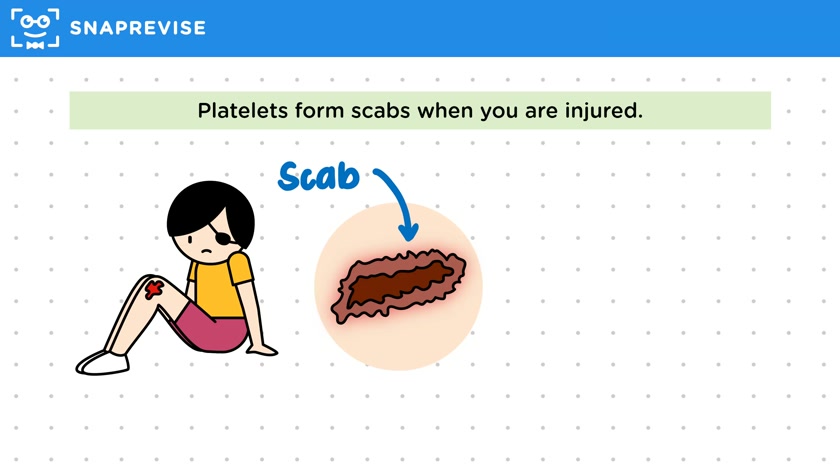
- The function of platelets is to form scabs.
- When injured, platelets act like a natural plaster, fusing together to form a scab over a cut.
- A well-formed scab protects the scrape from further injury and infection.
- Platelets initiate the blood clotting process.
- They help form a sticky mesh that traps red blood cells and creates a blood clot.
- This blood clot eventually hardens into a scab.
- Understanding the detailed mechanism of blood clotting is not necessary, but it's important to know that platelets are responsible for it.
Please subscribe to access these revision notes.
This, and all other video notes, are included in our premium subscriptions.
Premium accounts get access to all videos and revision notes.
55
questions for Organisation
47
questions for Animal tissues, organs and organ systems