
GCSE Biology (AQA)
331 videos | 14 hours
Please subscribe to watch this video.
This, and all other videos, are included in our premium subscriptions.
Premium accounts get access to all videos.
Enable autoplay to keep watching
Your browser is blocking videos from playing automatically. To turn it back on:
Safari (Mac): Click the Safari menu item in the top bar, then Settings → Websites → Auto-Play, then set Auto-Play to Allow All Auto-Play for the current website.
Safari (iPhone/iPad): open the Settings app, then Apps → Safari → Auto-Play, and select Allow All Auto-Play.
Polydactyly
- Polydactyly is a genetic condition where animals are born with extra fingers or toes.
- It is caused by a dominant allele, making it a common condition that runs in families.
- Individuals with polydactyly have either homozygous dominant or heterozygous genotypes.
- Only one dominant allele is necessary for a person to exhibit polydactyly.
- If one parent has two dominant alleles (homozygous dominant), all their offspring will inherit polydactyly.
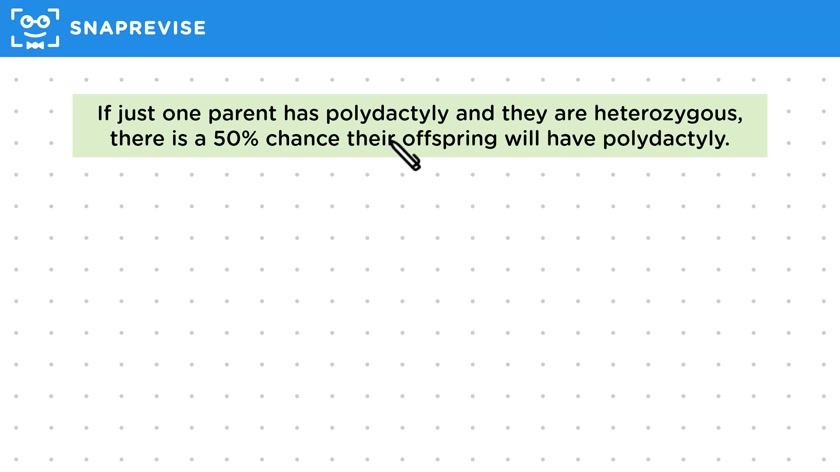
- If one parent is heterozygous for polydactyly and the other is homozygous recessive, there is a 50% chance their offspring will inherit polydactyly.
- If both parents are heterozygous, there is a 75% chance their offspring will inherit polydactyly.
- The extra fingers or toes may sometimes be removed if they cause problems.
- Understanding and predicting the inheritance of polydactyly involves using Punnett squares to determine the probability of offspring inheriting the condition based on parental genotypes.
Please subscribe to access these revision notes.
This, and all other video notes, are included in our premium subscriptions.
Premium accounts get access to all videos and revision notes.
114
questions for Inheritance, variation and evolution
19
questions for Reproduction