
GCSE Biology (AQA)
331 videos | 14 hours
Please subscribe to watch this video.
This, and all other videos, are included in our premium subscriptions.
Premium accounts get access to all videos.
Enable autoplay to keep watching
Your browser is blocking videos from playing automatically. To turn it back on:
Safari (Mac): Click the Safari menu item in the top bar, then Settings → Websites → Auto-Play, then set Auto-Play to Allow All Auto-Play for the current website.
Safari (iPhone/iPad): open the Settings app, then Apps → Safari → Auto-Play, and select Allow All Auto-Play.
Predator-Prey Cycles
- In stable communities, predator and prey populations fluctuate in cycles.
- Predator numbers increase following a rise in prey numbers due to more available food.
- High predator numbers lead to increased predation, causing prey numbers to decrease.
- Typically, prey populations are larger than predator populations to prevent excessive competition for food and sustain predator populations.
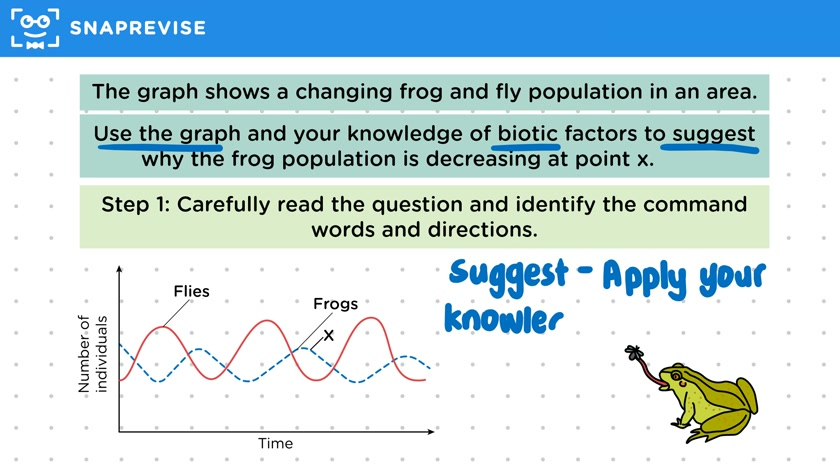
- Questions about these dynamics might involve analyzing graphs showing changes in populations, such as frogs and flies.
- To answer such questions, it's important to:
- Read the question carefully and understand the command words.
- Use the graph to support the answer.
- Identify the specific point or trend on the graph to discuss.
- Explain how changes in one population (e.g., flies) affect another (e.g., frogs).
- Consider biotic factors like predation and disease that could impact population sizes.
- Fewer flies lead to less food for frogs, resulting in a decrease in the frog population.
- Frogs, while being predators, may also face threats from their own predators or diseases.
Please subscribe to access these revision notes.
This, and all other video notes, are included in our premium subscriptions.
Premium accounts get access to all videos and revision notes.
133
questions for Ecology
38
questions for Organisation of an ecosystem