
GCSE Biology (AQA)
331 videos | 14 hours
Please subscribe to watch this video.
This, and all other videos, are included in our premium subscriptions.
Premium accounts get access to all videos.
Enable autoplay to keep watching
Your browser is blocking videos from playing automatically. To turn it back on:
Safari (Mac): Click the Safari menu item in the top bar, then Settings → Websites → Auto-Play, then set Auto-Play to Allow All Auto-Play for the current website.
Safari (iPhone/iPad): open the Settings app, then Apps → Safari → Auto-Play, and select Allow All Auto-Play.
Rate of Decay
- Rate of decay can be decreased by limiting oxygen and water availability.
- Sealed containers help restrict oxygen and water from reaching food, slowing decay.
- Temperature also affects the rate of decay, with warmer temperatures generally increasing decay until it becomes too hot, which kills bacteria and denatures enzymes.
- Decay rate can be calculated by observing changes in conditions such as temperature, pH, mass, or carbon dioxide levels over time.
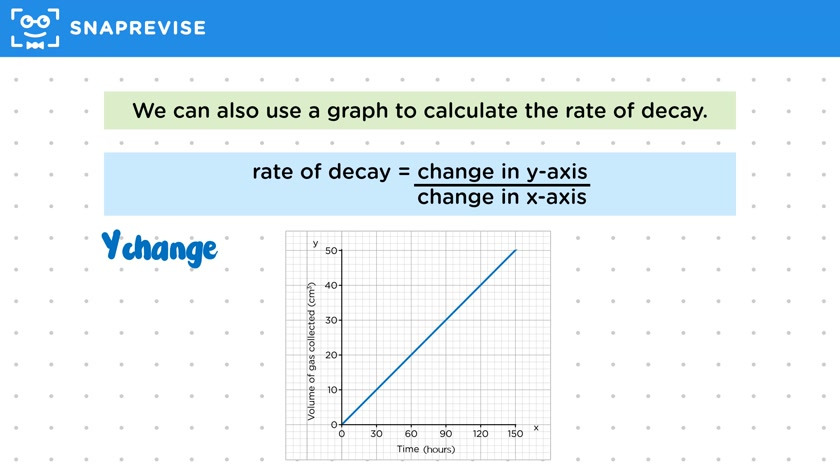
- Graphs can be used to calculate decay rates by measuring changes along the Y axis (decay rate) over changes along the X axis (time).
- An example experiment involves keeping milk at various temperatures and measuring the pH change over time to determine the rate of decay.
- The rate of decay is calculated as the change in value (e.g., pH) divided by the change in time, using data from experiments or provided data tables.
- In exams, understanding how to calculate rate of decay involves interpreting data tables, applying the correct formula, and ensuring proper units are used in calculations.
Please subscribe to access these revision notes.
This, and all other video notes, are included in our premium subscriptions.
Premium accounts get access to all videos and revision notes.
61
questions for Ecology
16
questions for Organisation of an ecosystem