
GCSE Biology (AQA)
331 videos | 14 hours
Please subscribe to watch this video.
This, and all other videos, are included in our premium subscriptions.
Premium accounts get access to all videos.
Enable autoplay to keep watching
Your browser is blocking videos from playing automatically. To turn it back on:
Safari (Mac): Click the Safari menu item in the top bar, then Settings → Websites → Auto-Play, then set Auto-Play to Allow All Auto-Play for the current website.
Safari (iPhone/iPad): open the Settings app, then Apps → Safari → Auto-Play, and select Allow All Auto-Play.
Red Blood Cells
- Red blood cells are crucial for transporting oxygen throughout the body.
- There are about 5 billion red blood cells in a cubic centimeter of blood.
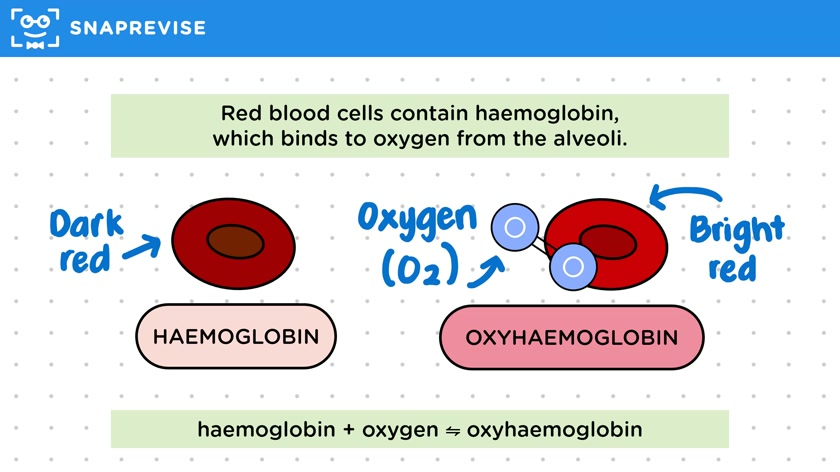
- Red blood cells contain hemoglobin, which binds to oxygen from the alveoli.
- Each red blood cell contains millions of hemoglobin molecules, giving them their red color.
- Hemoglobin binds with oxygen to form oxyhemoglobin, which turns red blood cells bright red.
- The color change in red blood cells is reversible as they deliver oxygen to tissues.
- Blood always appears red, but can look blue through the skin due to the blood vessel walls; blue is also used in diagrams to represent deoxygenated blood.
- Red blood cells are adapted for oxygen transport by lacking a nucleus, allowing more room for hemoglobin.
- Their biconcave or disc shape provides a high surface area to volume ratio, maximizing oxygen diffusion.
- Understanding how red blood cells are adapted to their function is a common exam question related to diffusion.
Please subscribe to access these revision notes.
This, and all other video notes, are included in our premium subscriptions.
Premium accounts get access to all videos and revision notes.
55
questions for Organisation
47
questions for Animal tissues, organs and organ systems