
GCSE Biology (AQA)
331 videos | 14 hours
Please subscribe to watch this video.
This, and all other videos, are included in our premium subscriptions.
Premium accounts get access to all videos.
Enable autoplay to keep watching
Your browser is blocking videos from playing automatically. To turn it back on:
Safari (Mac): Click the Safari menu item in the top bar, then Settings → Websites → Auto-Play, then set Auto-Play to Allow All Auto-Play for the current website.
Safari (iPhone/iPad): open the Settings app, then Apps → Safari → Auto-Play, and select Allow All Auto-Play.
Shivering & Sweating
- Shivering occurs when you feel too cold, caused by rhythmic contractions of skeletal muscles.
- Skeletal muscles, usually responsible for voluntary movements, are attached to the skeleton by tendons.
- Shivering is an involuntary action, though it can be initiated on command.
- Shivering requires energy from respiration, an exothermic reaction that releases heat.
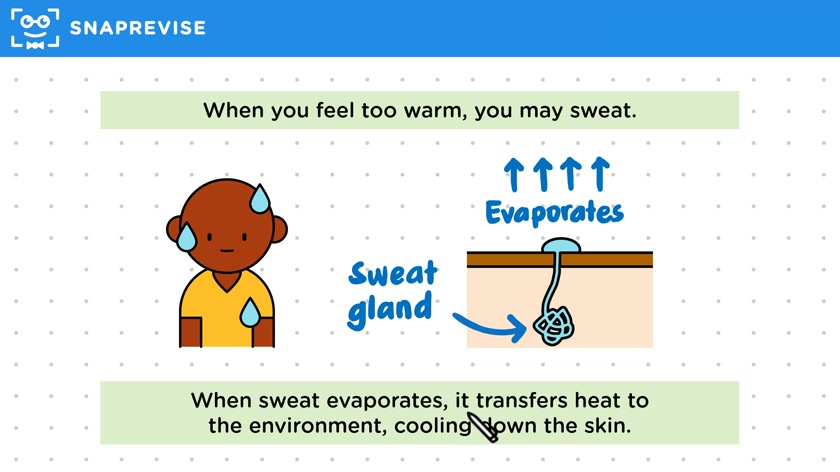
- Feeling too warm can lead to sweating, a process where sweat glands underneath the skin produce sweat.
- Sweat lays on the skin and evaporates, transferring heat energy away from the body and cooling the skin.
- The evaporation process involves heat energy transferring from the skin to water molecules on the skin.
- These water molecules gain enough energy to overcome intermolecular forces, turn into gas, and carry the heat into the air.
- Intermolecular forces, the attractive forces between water molecules, are broken by this heat energy, facilitating the transfer of heat from the body to the environment.
Please subscribe to access these revision notes.
This, and all other video notes, are included in our premium subscriptions.
Premium accounts get access to all videos and revision notes.
162
questions for Homeostasis and response
51
questions for The human nervous system