
GCSE Biology (AQA)
331 videos | 14 hours
Please subscribe to watch this video.
This, and all other videos, are included in our premium subscriptions.
Premium accounts get access to all videos.
Enable autoplay to keep watching
Your browser is blocking videos from playing automatically. To turn it back on:
Safari (Mac): Click the Safari menu item in the top bar, then Settings → Websites → Auto-Play, then set Auto-Play to Allow All Auto-Play for the current website.
Safari (iPhone/iPad): open the Settings app, then Apps → Safari → Auto-Play, and select Allow All Auto-Play.
Specialised Plant Cells
- Specialized cells in plants perform specific functions and develop unique subcellular structures like cell organelles.
- Examples of specialized cells include root hair cells, xylem cells, and phloem cells.
- For exams, students need to recognize, draw, and interpret images of these cells and link their structures to their functions.
- Root hair cells specialize in absorbing water and mineral ions from the soil, featuring long thin extensions that increase surface area for absorption.
- Root hair cells contain a large vacuole, mitochondria for energy, and ribosomes for protein synthesis, all crucial for their function.
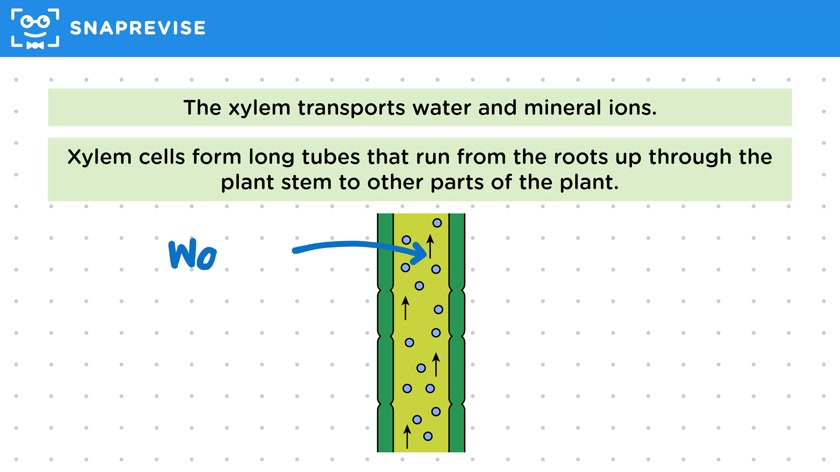
- Xylem cells transport water and mineral ions from roots to other parts of the plant through long tubes made from elongated dead cells, reinforced with lignin.
- The xylem's structure, lacking end walls and having thick walls strengthened by lignin, facilitates the one-way flow of water and minerals in a process called transpiration.
- Phloem cells transport dissolved sugars and amino acids, requiring energy from external cells.
- Phloem tubes are made from living cells arranged end-to-end, lacking a nucleus but having pores in their end walls to allow cytoplasm to flow and carry nutrients.
- Students must understand and explain the adaptations of root hair cells, xylem, and phloem for their exams.
Please subscribe to access these revision notes.
This, and all other video notes, are included in our premium subscriptions.
Premium accounts get access to all videos and revision notes.
145
questions for Cell biology
27
questions for Cell structure