
GCSE Biology (AQA)
331 videos | 14 hours
Please subscribe to watch this video.
This, and all other videos, are included in our premium subscriptions.
Premium accounts get access to all videos.
Enable autoplay to keep watching
Your browser is blocking videos from playing automatically. To turn it back on:
Safari (Mac): Click the Safari menu item in the top bar, then Settings → Websites → Auto-Play, then set Auto-Play to Allow All Auto-Play for the current website.
Safari (iPhone/iPad): open the Settings app, then Apps → Safari → Auto-Play, and select Allow All Auto-Play.
Speciation
- Speciation is the gradual formation of a new species over hundreds of thousands to millions of years through evolution.
- Alfred Russell Wallace first proposed the idea of speciation during his travels in Asia.
- Wallace spent four years in the Amazon rainforest and eight years in the East Indies (now Singapore, Malaysia, and Indonesia), observing animal evolution.
- For exams, it's important to recognize Wallace as the first to propose speciation but not necessary to detail how evidence has shaped current understanding.
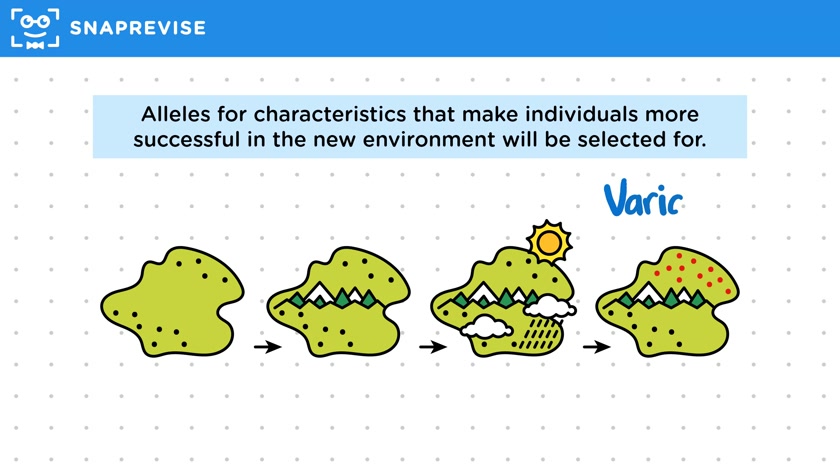
- Speciation occurs when individuals of a species become isolated due to environmental changes like mountain ranges, ice melting, or rivers forming.
- Isolated groups breed separately, increasing genetic variation through mutations.
- Natural selection favors alleles that enhance survival and reproduction in new environmental conditions.
- Example: Bird populations separated by a mountain range evolved different beak shapes (blunt for nuts and seeds, pointed for insects) due to available food sources.
- Over many generations, these adaptations can lead to significant differences, eventually preventing interbreeding and leading to the formation of new species.
- This process exemplifies how speciation can lead to diversity in traits like beak shapes adapted to specific diets.
Please subscribe to access these revision notes.
This, and all other video notes, are included in our premium subscriptions.
Premium accounts get access to all videos and revision notes.
114
questions for Inheritance, variation and evolution
47
questions for The development of understanding of genetics and evolution