
GCSE Biology (AQA)
331 videos | 14 hours
Please subscribe to watch this video.
This, and all other videos, are included in our premium subscriptions.
Premium accounts get access to all videos.
Enable autoplay to keep watching
Your browser is blocking videos from playing automatically. To turn it back on:
Safari (Mac): Click the Safari menu item in the top bar, then Settings → Websites → Auto-Play, then set Auto-Play to Allow All Auto-Play for the current website.
Safari (iPhone/iPad): open the Settings app, then Apps → Safari → Auto-Play, and select Allow All Auto-Play.
Stages of the Menstrual Cycle
- The menstrual cycle consists of four main stages.
- The cycle is a recurring process that starts over once it completes.
- The purpose of the menstrual cycle is to prepare the uterus for potential pregnancy.
- The first stage is menstruation, commonly known as having a period, where menstrual fluid, including blood and an unfertilized egg, exits the uterus.
- Menstruation typically lasts between two to five days, with an average blood loss of about four tablespoons, though this can vary significantly.
- The second stage involves the maturation of an egg and thickening of the uterine lining.
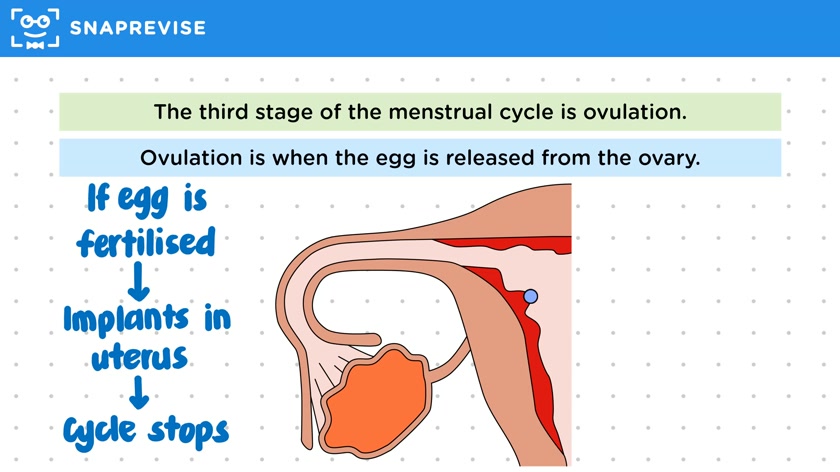
- The third stage, ovulation, occurs when the egg is released from the ovary and travels towards the uterus.
- If the egg is fertilized by a sperm, it implants in the uterine lining, halting the menstrual cycle and beginning pregnancy.
- If not fertilized, the egg breaks down, and the cycle continues.
- The fourth stage sees further thickening of the uterine lining until it breaks down if no fertilized egg is present, turning into menstrual fluid.
- The cycle restarts with menstruation on day one.
- A graph typically represents the menstrual cycle, showing changes in the thickness of the uterine lining over time, with the lining thinning during menstruation and thickening afterwards until it breaks down again at the end of the cycle.
Please subscribe to access these revision notes.
This, and all other video notes, are included in our premium subscriptions.
Premium accounts get access to all videos and revision notes.
162
questions for Homeostasis and response
99
questions for Hormonal coordination in humans