
GCSE Biology (AQA)
331 videos | 14 hours
Please subscribe to watch this video.
This, and all other videos, are included in our premium subscriptions.
Premium accounts get access to all videos.
Enable autoplay to keep watching
Your browser is blocking videos from playing automatically. To turn it back on:
Safari (Mac): Click the Safari menu item in the top bar, then Settings → Websites → Auto-Play, then set Auto-Play to Allow All Auto-Play for the current website.
Safari (iPhone/iPad): open the Settings app, then Apps → Safari → Auto-Play, and select Allow All Auto-Play.
Switching Reproductive Methods
- Some organisms can reproduce both sexually and asexually, depending on the circumstances.
- It's important to understand the advantages and disadvantages of both reproduction methods for different organisms.
- Examples of organisms that use both methods include many plants and certain parasites like those causing malaria.
- Plants can reproduce sexually through pollen and egg cells and asexually through methods like runners in strawberry plants and bulb division in daffodils, bluebells, and potatoes.
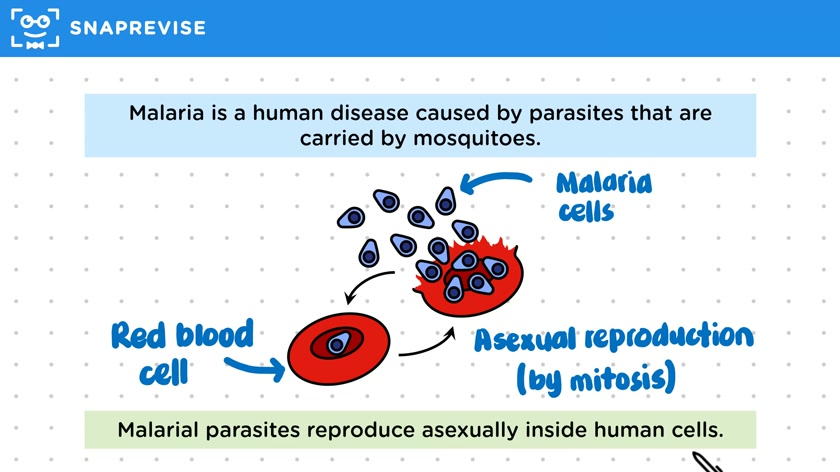
- Malaria parasites reproduce asexually inside human red blood cells through mitosis and sexually inside mosquitoes through the development of gametes and fertilization.
- Fungi reproduce asexually using spores that grow into new fruiting bodies, a process involving only mitosis, resulting in genetically identical offspring.
- Fungi can also reproduce sexually, where spores undergo meiosis, leading to genetic variation in the new mushrooms.
- Understanding these reproduction methods is essential for exams, but detailed descriptions of the processes are not required.
Please subscribe to access these revision notes.
This, and all other video notes, are included in our premium subscriptions.
Premium accounts get access to all videos and revision notes.
114
questions for Inheritance, variation and evolution
19
questions for Reproduction