
GCSE Biology (AQA)
331 videos | 14 hours
Please subscribe to watch this video.
This, and all other videos, are included in our premium subscriptions.
Premium accounts get access to all videos.
Enable autoplay to keep watching
Your browser is blocking videos from playing automatically. To turn it back on:
Safari (Mac): Click the Safari menu item in the top bar, then Settings → Websites → Auto-Play, then set Auto-Play to Allow All Auto-Play for the current website.
Safari (iPhone/iPad): open the Settings app, then Apps → Safari → Auto-Play, and select Allow All Auto-Play.
The Kidneys
- Kidneys are two bean-shaped organs located near the lower back.
- Kidneys produce urine, which is stored in the bladder.
- Tubes carry urine from the kidneys to the bladder.
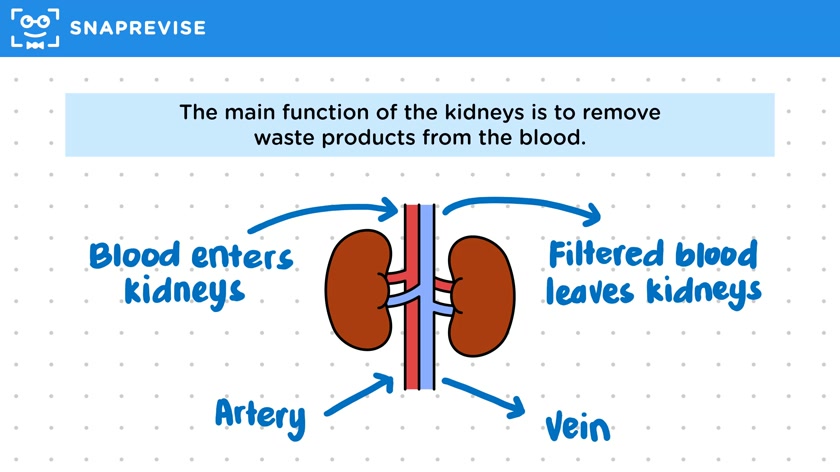
- Main function of the kidneys is to remove waste products from the blood.
- Blood enters the kidneys through an artery and is filtered, then leaves through a vein.
- Important to know the difference between veins and arteries: arteries take blood away from the heart, veins carry blood to the heart.
- Kidneys remove three types of waste products: excess water, excess ions (such as sodium and chloride), and urea (a product of protein breakdown).
Please subscribe to access these revision notes.
This, and all other video notes, are included in our premium subscriptions.
Premium accounts get access to all videos and revision notes.
162
questions for Homeostasis and response
99
questions for Hormonal coordination in humans