
GCSE Biology (AQA)
331 videos | 14 hours
Please subscribe to watch this video.
This, and all other videos, are included in our premium subscriptions.
Premium accounts get access to all videos.
Enable autoplay to keep watching
Your browser is blocking videos from playing automatically. To turn it back on:
Safari (Mac): Click the Safari menu item in the top bar, then Settings → Websites → Auto-Play, then set Auto-Play to Allow All Auto-Play for the current website.
Safari (iPhone/iPad): open the Settings app, then Apps → Safari → Auto-Play, and select Allow All Auto-Play.
The Liver & Bile
- Bile is a greenish-yellow fluid produced by the liver.
- The liver is indicated in a diagram, with the gallbladder shown just underneath it.
- Bile is stored in the gallbladder and released into the top of the small intestine.
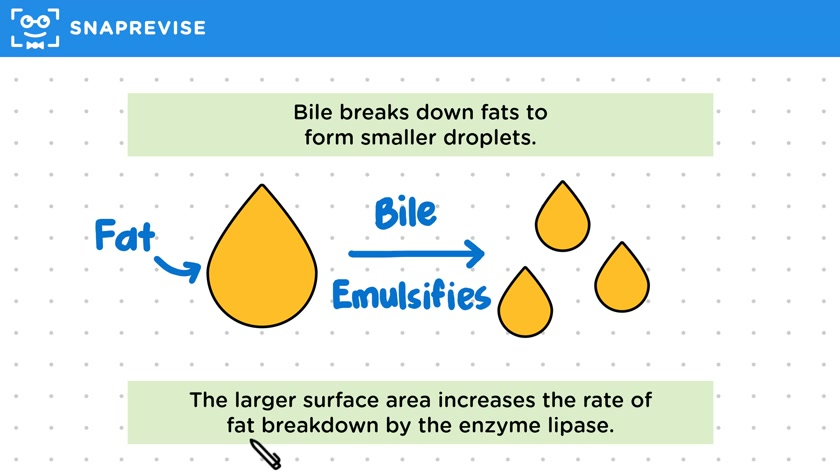
- Bile's function includes breaking down fats into smaller droplets, a process known as emulsification.
- Emulsification increases the surface area of fats, enhancing the breakdown rate by the enzyme lipase.
- Bile is alkaline, helping to neutralize hydrochloric acid from the stomach.
- The neutralization occurs at the top of the small intestine where bile mixes with stomach acid.
- A pH scale illustration shows the acidic nature of stomach acid and the alkaline nature of bile.
- The alkaline conditions created by bile increase the efficiency of lipase in fat breakdown.
- The optimum pH for lipase activity is alkaline, which speeds up its function.
Please subscribe to access these revision notes.
This, and all other video notes, are included in our premium subscriptions.
Premium accounts get access to all videos and revision notes.
55
questions for Organisation
47
questions for Animal tissues, organs and organ systems