
GCSE Biology (AQA)
331 videos | 14 hours
Please subscribe to watch this video.
This, and all other videos, are included in our premium subscriptions.
Premium accounts get access to all videos.
Enable autoplay to keep watching
Your browser is blocking videos from playing automatically. To turn it back on:
Safari (Mac): Click the Safari menu item in the top bar, then Settings → Websites → Auto-Play, then set Auto-Play to Allow All Auto-Play for the current website.
Safari (iPhone/iPad): open the Settings app, then Apps → Safari → Auto-Play, and select Allow All Auto-Play.
The Pituitary Gland
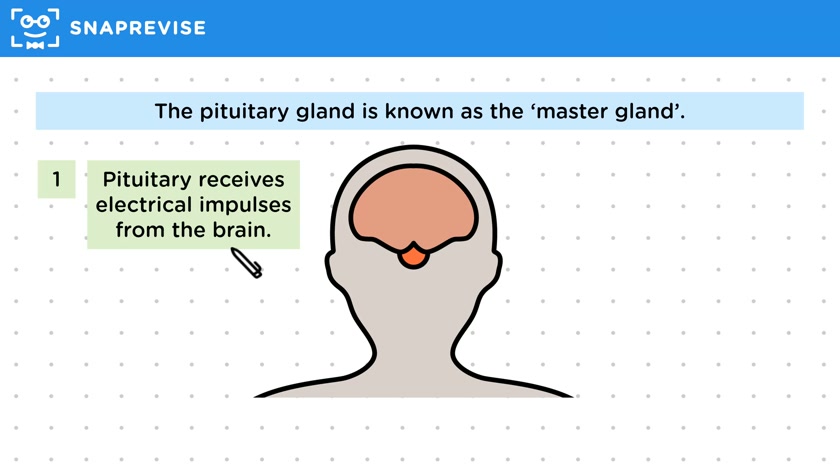
- The pituitary gland is known as the master gland.
- It is located at the base of the brain and is about the size of a pea.
- The pituitary gland is attached to the base of the brain but is not part of the brain itself.
- It controls other glands in the body, which is why it's called the master gland.
- The pituitary receives electrical impulses from the brain via the nervous system.
- It secretes (releases) a variety of hormones.
- These hormones travel via the blood to act on other glands throughout the body.
- The targeted glands then produce their own hormones in response to the pituitary's hormones.
Please subscribe to access these revision notes.
This, and all other video notes, are included in our premium subscriptions.
Premium accounts get access to all videos and revision notes.
162
questions for Homeostasis and response
99
questions for Hormonal coordination in humans