
GCSE Biology (AQA)
331 videos | 14 hours
Please subscribe to watch this video.
This, and all other videos, are included in our premium subscriptions.
Premium accounts get access to all videos.
Enable autoplay to keep watching
Your browser is blocking videos from playing automatically. To turn it back on:
Safari (Mac): Click the Safari menu item in the top bar, then Settings → Websites → Auto-Play, then set Auto-Play to Allow All Auto-Play for the current website.
Safari (iPhone/iPad): open the Settings app, then Apps → Safari → Auto-Play, and select Allow All Auto-Play.
Trophic Levels
- Trophic level refers to each level in a food chain or food web.
- Food chains are typically represented horizontally, but it's easier to think of trophic levels vertically.
- Each position in a food chain is called a trophic level, where energy is transferred between organisms.
- Multiple food chains can be combined to form a food web, which can also be organized into trophic levels.
- Trophic levels can be represented by numbers, starting from level one up to higher levels.
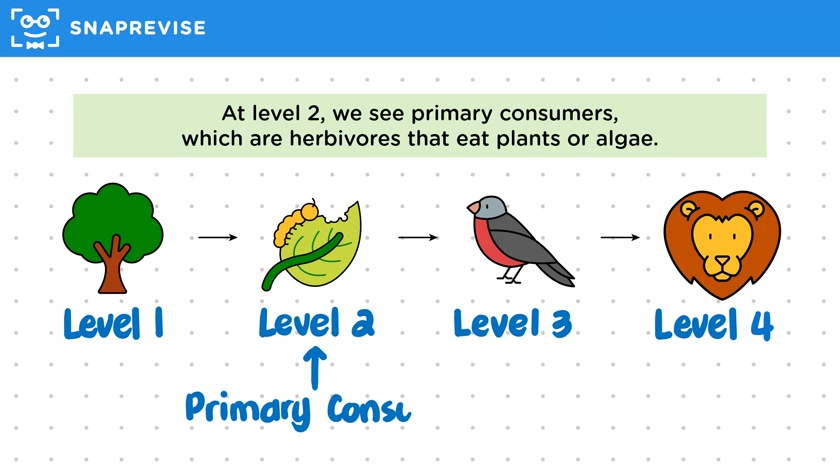
- Level one consists of producers (e.g., plants or algae) that make their own food.
- Level two includes primary consumers, which are herbivores that eat producers.
- Level three contains secondary consumers, which are carnivores that eat herbivores.
- Level four comprises tertiary consumers or apex predators, which are carnivores that eat other carnivores and have no natural predators (e.g., sharks, lions).
- Decomposers, such as bacteria, fungi, worms, and maggots, form a separate trophic level and break down dead plant and animal matter.
- It is important to understand the definitions and roles of producers, various levels of consumers, and decomposers for academic purposes.
Please subscribe to access these revision notes.
This, and all other video notes, are included in our premium subscriptions.
Premium accounts get access to all videos and revision notes.
61
questions for Ecology
15
questions for Trophic levels in an ecosystem (biology only)