
GCSE Biology (AQA)
331 videos | 14 hours
Please subscribe to watch this video.
This, and all other videos, are included in our premium subscriptions.
Premium accounts get access to all videos.
Enable autoplay to keep watching
Your browser is blocking videos from playing automatically. To turn it back on:
Safari (Mac): Click the Safari menu item in the top bar, then Settings → Websites → Auto-Play, then set Auto-Play to Allow All Auto-Play for the current website.
Safari (iPhone/iPad): open the Settings app, then Apps → Safari → Auto-Play, and select Allow All Auto-Play.
Vaccination
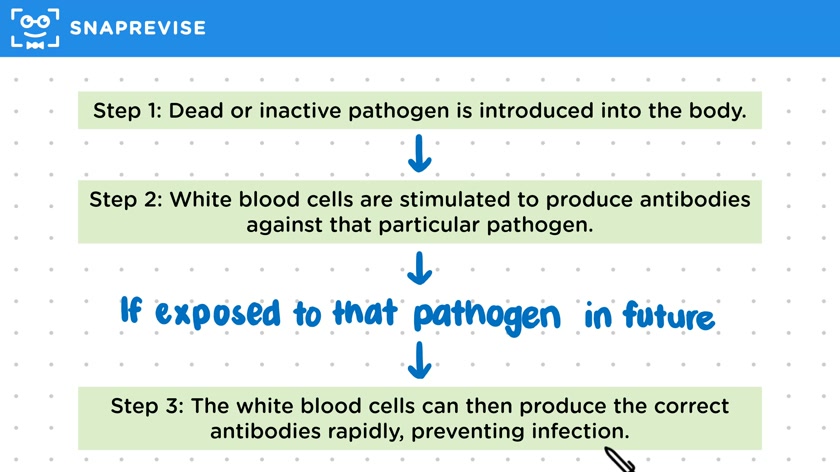
- Vaccination involves introducing a small quantity of a dead or inactive pathogen into the body, usually via injection.
- The pathogen inside the vaccine is dead and therefore safe.
- Vaccination protects individuals by preventing infection or illness if they are exposed to the pathogen.
- Vaccines stimulate white blood cells to produce antibodies against the introduced pathogen.
- If exposed to the same pathogen in the future, the body can rapidly produce the correct antibodies to prevent infection.
- Antibodies remain in the body after vaccination, allowing for a rapid response to future exposures.
- Antibody levels can decrease over time, which is why booster vaccines may be necessary.
- Booster vaccines or exposure to the pathogen can trigger a strong and rapid increase in antibody concentration.
- Widespread vaccination reduces the spread of disease by decreasing the number of people who can transmit the infection.
- As more people get vaccinated, the overall disease prevalence decreases, indirectly protecting even those who are not vaccinated through herd immunity.
- The term "herd immunity" refers to this protective effect but is not necessary for exam knowledge.
Please subscribe to access these revision notes.
This, and all other video notes, are included in our premium subscriptions.
Premium accounts get access to all videos and revision notes.
3
questions for Infection and response
1
questions for Communicable diseases