
GCSE Biology (AQA)
331 videos | 14 hours
Please subscribe to watch this video.
This, and all other videos, are included in our premium subscriptions.
Premium accounts get access to all videos.
Enable autoplay to keep watching
Your browser is blocking videos from playing automatically. To turn it back on:
Safari (Mac): Click the Safari menu item in the top bar, then Settings → Websites → Auto-Play, then set Auto-Play to Allow All Auto-Play for the current website.
Safari (iPhone/iPad): open the Settings app, then Apps → Safari → Auto-Play, and select Allow All Auto-Play.
Vasoconstriction & Vasodilation
- Heat energy is transferred from our bodies to the environment via the skin.
- Heat loss also occurs through the lungs and excretions.
- The desirability of heat loss depends on body temperature; it's beneficial when hot and undesirable when cold.
- Blood vessels near the skin help regulate heat loss.
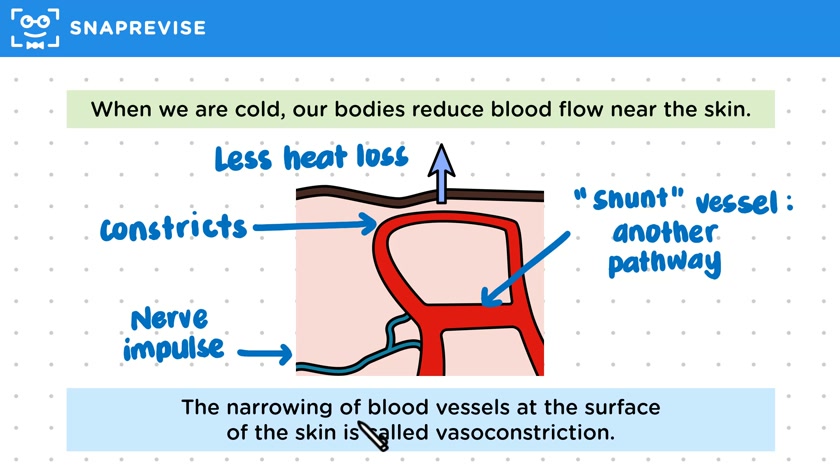
- When cold, the body reduces blood flow near the skin, causing vasoconstriction, which reduces heat loss.
- Vasoconstriction involves the narrowing of blood vessels at the skin's surface, triggered by nerve impulses from the brain.
- The opposite of vasoconstriction is vasodilation, which occurs when the body is hot.
- Vasodilation increases blood flow near the skin, making blood vessels more visible and the skin redder or darker, thus increasing heat loss.
- Vasodilation is the widening of blood vessels at the skin's surface, also controlled by nerve impulses from the brain.
Please subscribe to access these revision notes.
This, and all other video notes, are included in our premium subscriptions.
Premium accounts get access to all videos and revision notes.
162
questions for Homeostasis and response
51
questions for The human nervous system