
GCSE Biology (AQA)
331 videos | 14 hours
Please subscribe to watch this video.
This, and all other videos, are included in our premium subscriptions.
Premium accounts get access to all videos.
Enable autoplay to keep watching
Your browser is blocking videos from playing automatically. To turn it back on:
Safari (Mac): Click the Safari menu item in the top bar, then Settings → Websites → Auto-Play, then set Auto-Play to Allow All Auto-Play for the current website.
Safari (iPhone/iPad): open the Settings app, then Apps → Safari → Auto-Play, and select Allow All Auto-Play.
Water Balance
- Water levels in the body decrease through exhalation, sweating, and urination.
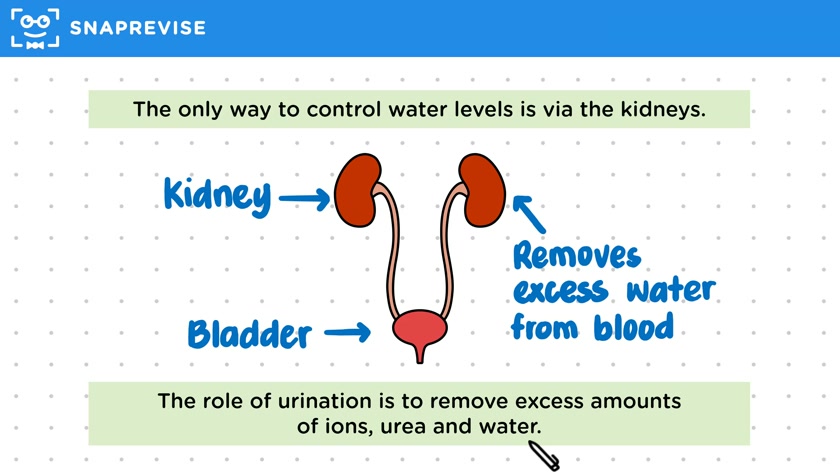
- Urine is produced in the kidneys and excreted from the bladder.
- Water levels increase by eating and drinking.
- Sweat excretes water, sodium, chloride, and urea.
- The primary function of sweat is to cool the body, not to remove excess water.
- Kidneys regulate water levels by removing excess water from the blood.
- Urination removes excess ions, urea, and water, contrasting with water loss through breathing and sweating.
- Changing water levels affect cells through osmotic changes, impacting the diffusion of water across cell membranes.
- Cells in low water environments will shrivel as water moves from a higher concentration inside to a lower concentration outside.
- In healthy water levels, there is no net movement of water into or out of cells.
- Cells in high water environments can swell or burst as water moves from a higher concentration outside to a lower concentration inside.
- Proper cell function is compromised if cells gain or lose too much water by osmosis.
- Maintaining healthy water levels is crucial for bodily functions.
Please subscribe to access these revision notes.
This, and all other video notes, are included in our premium subscriptions.
Premium accounts get access to all videos and revision notes.
162
questions for Homeostasis and response
99
questions for Hormonal coordination in humans