
GCSE Biology (AQA)
331 videos | 14 hours
Please subscribe to watch this video.
This, and all other videos, are included in our premium subscriptions.
Premium accounts get access to all videos.
Enable autoplay to keep watching
Your browser is blocking videos from playing automatically. To turn it back on:
Safari (Mac): Click the Safari menu item in the top bar, then Settings → Websites → Auto-Play, then set Auto-Play to Allow All Auto-Play for the current website.
Safari (iPhone/iPad): open the Settings app, then Apps → Safari → Auto-Play, and select Allow All Auto-Play.
White Blood Cells
- White blood cells are part of the immune system.
- They help fight off invading microorganisms and viruses.
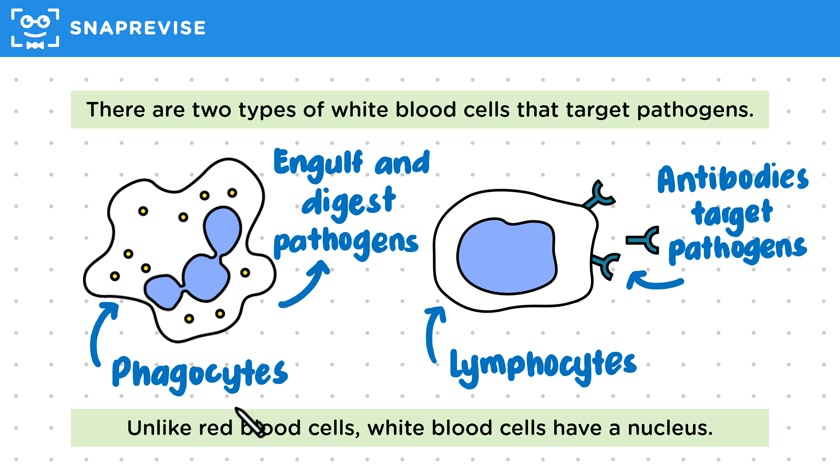
- A diagram shows a white blood cell.
- White blood cells protect our bodies from infection.
- There are two types of white blood cells that target pathogens: phagocytes and lymphocytes.
- Phagocytes engulf and digest pathogens.
- Lymphocytes produce antibodies that target pathogens.
- More details on phagocytes and lymphocytes will be covered elsewhere in the course.
- Unlike red blood cells, white blood cells have a nucleus.
- White blood cells make up a tiny proportion of the blood.
- When blood is centrifuged, the plasma appears as a straw-colored liquid at the top, red blood cells at the bottom, and white blood cells and platelets form a thin blue layer in the middle.
- White blood cells and platelets make up less than 1% of the blood.
- There are approximately 7.5 million white blood cells in a cubic centimeter of blood.
- The specific numbers of white blood cells are not required to be memorized but are provided for appreciation of their abundance in the body.
Please subscribe to access these revision notes.
This, and all other video notes, are included in our premium subscriptions.
Premium accounts get access to all videos and revision notes.
55
questions for Organisation
47
questions for Animal tissues, organs and organ systems