
GCSE Chemistry (AQA)
196 videos | 19 hours
Please subscribe to watch this video.
This, and all other videos, are included in our premium subscriptions.
Premium accounts get access to all videos.
Enable autoplay to keep watching
Your browser is blocking videos from playing automatically. To turn it back on:
Safari (Mac): Click the Safari menu item in the top bar, then Settings → Websites → Auto-Play, then set Auto-Play to Allow All Auto-Play for the current website.
Safari (iPhone/iPad): open the Settings app, then Apps → Safari → Auto-Play, and select Allow All Auto-Play.
Advanced Ionic Formulae
- Some ions cannot be deduced using the periodic table and need to be memorized.
- The hydroxide ion is an example, made up of oxygen and hydrogen with a single negative charge.
- An ion made up of two or more elements is known as a compound ion.
- Positive ions (cations) to memorize include:
- Lead forms a Pb����� ion.
- Silver forms an Ag��� ion.
- Ammonium ion (NH������) is a compound ion.
- Negative ions (anions) to memorize include:
- Carbonate ion: CO��������
- Hydroxide ion: OH���
- Sulfate ion: SO��������
- Nitrate ion: NO������
- These compound ions must be memorized as their charges cannot be deduced from the periodic table.
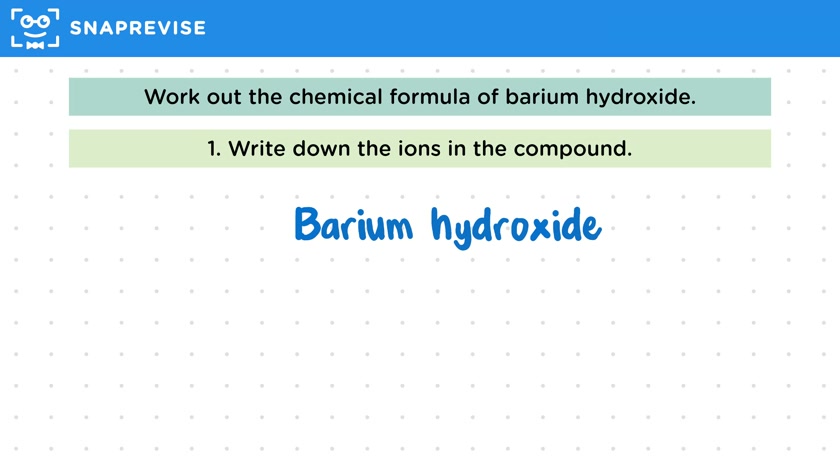
- Example: Chemical formula of barium hydroxide.
- Step 1: Identify ions - Barium (Ba�����) and hydroxide (OH���).
- Step 2: Balance charges - Need two OH��� ions to balance Ba�����.
- Step 3: Write formula - Ba(OH)���, using brackets for multiple compound ions.
- Swap and drop method can be used to determine formulas.
- Example: Chemical formula of ammonium sulfate.
- Step 1: Identify ions - Ammonium (NH������) and sulfate (SO��������).
- Step 2: Use swap and drop method - Final formula is (NH���)���SO���, with brackets around NH��� for multiple ions.
Please subscribe to access these revision notes.
This, and all other video notes, are included in our premium subscriptions.
Premium accounts get access to all videos and revision notes.
40
questions for Bonding, structure, and the properties of matter
13
questions for Chemical bonds, ionic, covalent and metallic