
GCSE Chemistry (AQA)
196 videos | 19 hours
Please subscribe to watch this video.
This, and all other videos, are included in our premium subscriptions.
Premium accounts get access to all videos.
Enable autoplay to keep watching
Your browser is blocking videos from playing automatically. To turn it back on:
Safari (Mac): Click the Safari menu item in the top bar, then Settings → Websites → Auto-Play, then set Auto-Play to Allow All Auto-Play for the current website.
Safari (iPhone/iPad): open the Settings app, then Apps → Safari → Auto-Play, and select Allow All Auto-Play.
Corrosion & Rusting
- Corrosion is the destruction of materials by chemical reactions with environmental substances.
- Certain chemicals can erode materials, leading to structural breakdown, known as corrosion.
- Rusting is a common example of corrosion, requiring both air and water for iron to rust.
- When iron is exposed to oxygen and water, it turns orange or reddish-brown and flaky, forming rust.
- Rusting is represented by the chemical equation: Iron + Oxygen + Water ��� Hydrated Iron (III) Oxide.
- Only iron rusts, as rust is an oxide of iron.
- Rusting is an example of corrosion because it causes iron to break down over time with continued exposure to oxygen and water.
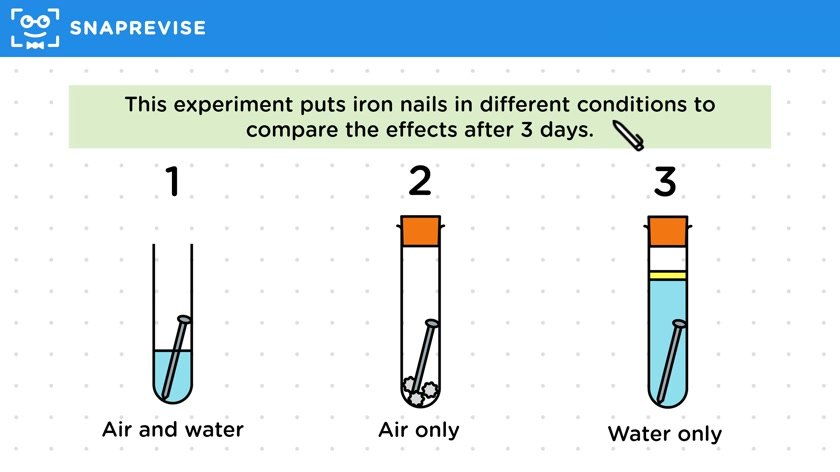
- Experiments can demonstrate that both air and water are necessary for rusting.
- A school laboratory experiment can investigate rusting conditions by placing iron nails in different environments.
- In the experiment, only the nail exposed to both air and water rusted, confirming the need for both conditions.
- The experiment's results showed an increase in mass for the rusted nail, indicating rust formation.
- Understanding and interpreting such experiments is important for exams to demonstrate the necessity of air and water for rusting.
Please subscribe to access these revision notes.
This, and all other video notes, are included in our premium subscriptions.
Premium accounts get access to all videos and revision notes.
18
questions for Using resources
3
questions for Using materials (chemistry only)