
GCSE Chemistry (AQA)
196 videos | 19 hours
Please subscribe to watch this video.
This, and all other videos, are included in our premium subscriptions.
Premium accounts get access to all videos.
Enable autoplay to keep watching
Your browser is blocking videos from playing automatically. To turn it back on:
Safari (Mac): Click the Safari menu item in the top bar, then Settings → Websites → Auto-Play, then set Auto-Play to Allow All Auto-Play for the current website.
Safari (iPhone/iPad): open the Settings app, then Apps → Safari → Auto-Play, and select Allow All Auto-Play.
Displacement Reactions of Metals
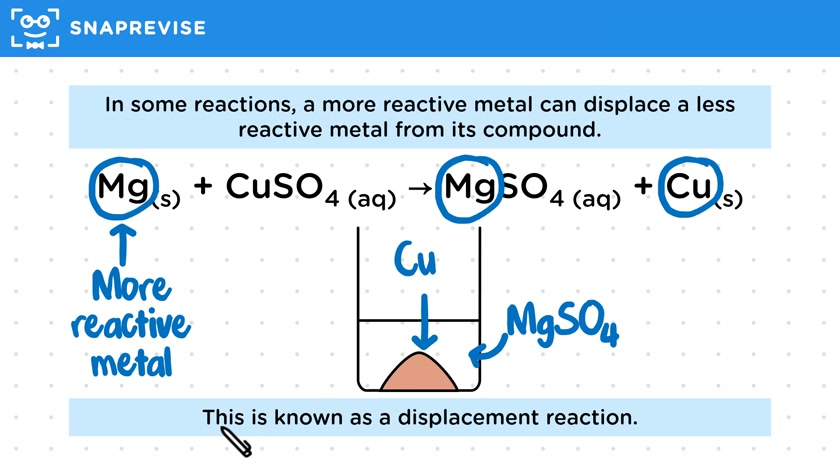
- More reactive metals can displace less reactive metals from their compounds.
- Example: Magnesium displaces copper from copper sulfate.
- Reaction: Magnesium + Copper Sulfate ��� Magnesium Sulfate + Copper.
- Magnesium is more reactive than copper.
- Adding magnesium to aqueous copper sulfate (blue liquid) causes a reaction.
- The blue solution fades to colorless, indicating magnesium sulfate formation.
- Red-brown copper coating forms on remaining magnesium.
- Magnesium displaces copper in the reaction.
- This type of reaction is called a displacement reaction.
- For exams, understand the concept of displacement reactions, specific examples not required.
- Another example: Calcium displaces iron from iron oxide.
- Reaction: Calcium + Iron Oxide ��� Calcium Oxide + Iron.
- Calcium is more reactive than iron.
- Iron is displaced by calcium, forming calcium oxide and leaving iron alone.
Please subscribe to access these revision notes.
This, and all other video notes, are included in our premium subscriptions.
Premium accounts get access to all videos and revision notes.
80
questions for Chemical changes
29
questions for Reactivity of metals