
GCSE Chemistry (AQA)
196 videos | 19 hours
Please subscribe to watch this video.
This, and all other videos, are included in our premium subscriptions.
Premium accounts get access to all videos.
Enable autoplay to keep watching
Your browser is blocking videos from playing automatically. To turn it back on:
Safari (Mac): Click the Safari menu item in the top bar, then Settings → Websites → Auto-Play, then set Auto-Play to Allow All Auto-Play for the current website.
Safari (iPhone/iPad): open the Settings app, then Apps → Safari → Auto-Play, and select Allow All Auto-Play.
Flame Emission Spectroscopy
- Sophisticated machines can detect and identify elements and compounds using instrumental methods of analysis.
- X-rays are used for medical scans and chemical analysis by observing reactions to the rays.
- Gas chromatography is used to detect banned substances in urine samples.
- Flame emission spectroscopy is an important process to know for exams.
- Instrumental methods are accurate, sensitive, and rapid compared to chemical tests.
- Flame emission spectroscopy analyzes metal ions in solutions.
- The process involves a flame, spectroscope, and spectrometer to analyze samples.
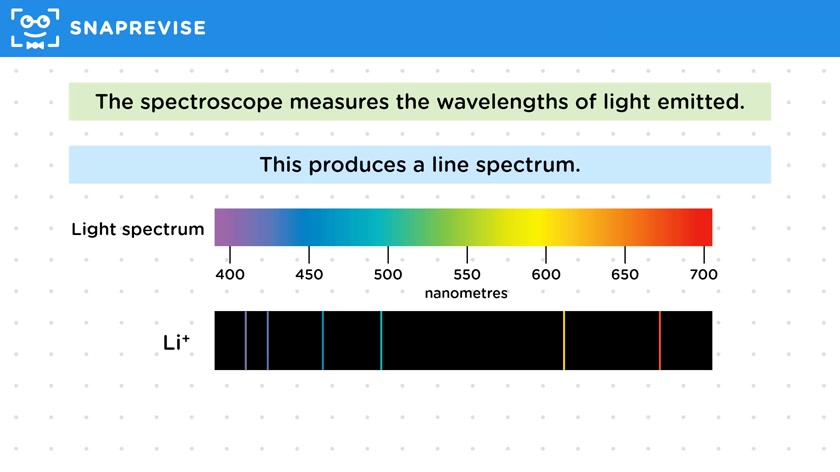
- The spectroscope measures wavelengths of light emitted, producing a line spectrum.
- Each metal ion produces a unique line spectrum, allowing identification.
- Flame emission spectroscopy can determine ion concentrations in solutions.
- Calibration curves are used to determine ion concentrations from spectroscope readings.
- The intensity of light correlates with the concentration of ions in a sample.
Please subscribe to access these revision notes.
This, and all other video notes, are included in our premium subscriptions.
Premium accounts get access to all videos and revision notes.
30
questions for Chemical analysis
9
questions for Identification of ions by chemical and spectroscopic means (chemistry only)