
GCSE Chemistry (AQA)
196 videos | 19 hours
Please subscribe to watch this video.
This, and all other videos, are included in our premium subscriptions.
Premium accounts get access to all videos.
Enable autoplay to keep watching
Your browser is blocking videos from playing automatically. To turn it back on:
Safari (Mac): Click the Safari menu item in the top bar, then Settings → Websites → Auto-Play, then set Auto-Play to Allow All Auto-Play for the current website.
Safari (iPhone/iPad): open the Settings app, then Apps → Safari → Auto-Play, and select Allow All Auto-Play.
Flame Tests
- Bionic compounds can be tested to identify the ions they contain.
- Example: Lithium oxide (LI���O) consists of two lithium metal ions and one oxide ion.
- Lithium ions have a specific electronic structure and are considered metal ions or cations.
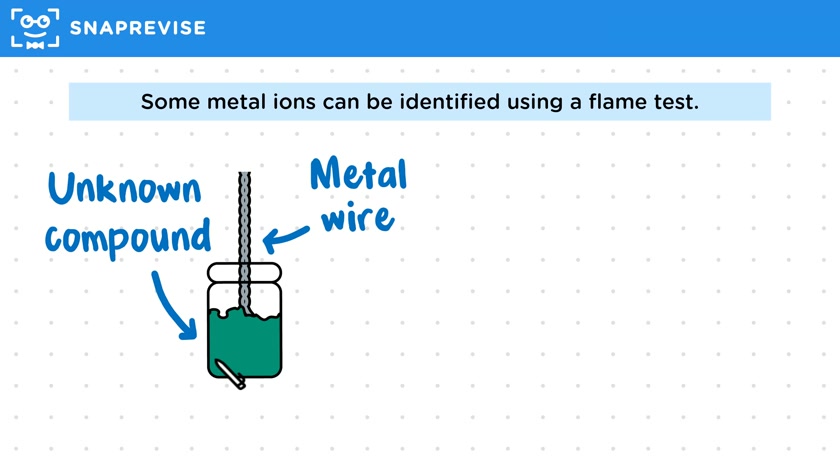
- Metal ions in compounds can be identified using a flame test.
- Flame tests are conducted using a solid sample and a metal wire, which must be inert and have a high melting point.
- Microme wires are often used for flame tests.
- The compound on the wire changes the color of the flame, indicating the cation present.
- It's important to clean the wire between tests to avoid mixed colors.
- Flame test colors for specific ions:
- Lithium: Crimson flame
- Sodium: Yellow flame
- Potassium: Lilac flame
- Calcium: Orange-red flame
- Copper (Cu�����): Green flame
Please subscribe to access these revision notes.
This, and all other video notes, are included in our premium subscriptions.
Premium accounts get access to all videos and revision notes.
30
questions for Chemical analysis
9
questions for Identification of ions by chemical and spectroscopic means (chemistry only)